

IN THIS GUIDE
- Why study psychology?
- Top Australian universities for postgraduate psychology courses in 2025
- Things to consider before studying a postgraduate psychology course
- Career outcomes for postgraduate psychology courses
- Salaries for postgraduate psychology careers
- Frequently asked questions about postgraduate psychology courses
- Expand your psychology career today

Completing a postgraduate degree in psychology is a pivotal decision that can significantly influence your career trajectory, giving you a competitive edge and opportunities to expand your professional network and embrace new roles in this rewarding field.
The demand for skilled psychologists in Australia is strong and continues to rise, with 49,700 psychologists currently employed and a 13.3 per cent expansion expected over the next five years.
Whether you are considering a change from another industry or thinking of specialising in a niche psychology field, investing in postgraduate psychology study can help ensure you enjoy a fulfilling career.
Why study psychology?
Learn from leading industry experts
Australia is renowned for its high-quality education standards, and the psychology field is no exception. Many prestigious universities in Australia rank globally for psychology, offering students the chance to learn from experienced industry professionals, leading researchers and academics who bring valuable expertise. Learning from industry experts equips you with in-demand skills, preparing you to build a thriving career in psychology.
Gain a globally-recognised qualification
A qualification in psychology from an Australian university can give domestic and international students global recognition, opportunities to use their skills in various countries and the chance to advance their career in psychology and beyond. The majority of universities offer courses that have been accredited by the Australian Psychology Accreditation Council (APAC). Completing an APAC-accredited course is essential for graduates seeking to progress toward attaining general registration to practice professionally as a psychologist.
Choose flexible study options
Flexibility is important to many students who want to pursue higher education, which is why various universities offer diverse study options to meet your personal, work and lifestyle needs. Whether you want an immersive on-campus experience and prefer to learn in person or you’re seeking the convenience and flexibility of online study, there are a range of institutions and courses to suit. Many postgraduate courses also have multiple intakes throughout the year, giving you the ability to choose the right time to begin your study journey.
Advance your career to make an impact
Psychology gives you the opportunity to develop important skills such as critical thinking, empathy, communication, collaboration and a deep understanding of human behaviour. Pursuing a degree in psychology and expanding your skills with postgraduate study can help set you up for success working in a range of fields. These may include private psychology practice, research, corporate roles, policy development, human resources, academia and education. No matter what your goals are, studying psychology is an important first step toward creating a rewarding and meaningful career.
Top Australian universities for postgraduate psychology courses in 2025
University ranking systems can be a valuable resource when selecting a university. Different universities rank for various metrics, including subjects, academic and research performance, employment outcomes and student experience. The QS World University Rankings 2025 give an overview of the top Australian universities that currently rank highly in the field of psychology.
| Ranking | University |
|---|---|
| # 21 | University of Melbourne |
| # 32 | The University of New South Wales |
| # 34 | The University of Queensland |
| # 39 | The University of Sydney |
| # 68 | Monash University |
| # 88 | Australian National University |
| # 101-150 | Deakin University |
| # 101-150 | Macquarie University |
|
# 101-150 |
Queensland University of Technology |
|
# 101-150 |
The University of Western Australia |
|
# 151-200 |
Australian Catholic University |
|
# 151-200 |
Curtin University |
|
# 151-200 |
LaTrobe University |
|
# 151-200 |
The University of Adelaide |
|
# 151-200 |
The University of Newcastle |
|
# 201-250 |
|
|
# 201-250 |
University of Wollongong |
|
# 251-300 |
Flinders University |
|
# 251-300 |
Griffith University |
|
# 251-300 |
University of South Australia |
|
# 251-300 |
Western Sydney University |
Things to consider before studying a postgraduate psychology course
Pursuing postgraduate study in psychology is an important commitment that brings both opportunities and challenges. As you explore your options, here are some considerations to help with the decision-making process.
-
- Advantages
-
Professional growth opportunities
Expanding your qualifications with postgraduate education can boost networking and opportunities for professional growth. You’ll be equipped with knowledge that gives you an industry advantage and keeps you at the forefront of your field to pursue clinical, research and non-clinical roles. -
Pursue a niche field
A postgraduate qualification in psychology can open the door to specialised roles, helping you align your strengths and passions with your career goals. As an authority in your field, you may become a sought-after candidate for many roles and sectors. These may include becoming a community psychologist, forensic psychologist or organisational psychologist. -
Higher earning potential
Gaining additional qualifications may also lead to higher income potential, such as those who have completed further study to become an endorsed psychologist. Clinical psychologists, forensic psychologists and sports psychologists are among some of the highest earning psychology professionals in Australia. -
Help people change their lives
Upskilling with postgraduate study helps you provide client-centred care, tailored to their needs. Advanced skills and knowledge helps you stay current with evidence-based best practices and industry trends. Your expertise means you can continue to make a meaningful impact on the lives of people, families and communities, whether in a clinical setting or a broader non-clinical role.
-
- Challenges
-
Financial investment
Postgraduate study can be expensive, so it’s important to take the time to consider whether you can make the financial commitment to completing a postgraduate degree. Each university has its own fees, payment options and government loan schemes available so it’s advisable to check with them directly to see if you’re eligible for financial support. -
Time commitment
While many postgraduate psychology courses offer the flexibility of studying online, there is still a requirement to adhere to deadlines, submit your assessments and complete your coursework..This needs to be balanced with your personal and work responsibilities and depending on the course-level you choose, may be a significant time commitment. -
Mentally and emotionally demanding
Psychology course content at an advanced level may typically involve engaging with difficult, sensitive or challenging topics. It’s worthwhile considering how you can best support yourself while committing to postgraduate study and to consider your own emotional wellbeing and career aspirations. -
Commitment to study
Taking on postgraduate study and managing the academic workload can cause mental fatigue and may be a risk for burnout as a student, especially if you’re balancing other concurrent obligations. Consider what you’ll need to persevere throughout the course and the ultimate goal of advancing your career with a deeper understanding of psychological theories and practices.
Career outcomes for postgraduate psychology courses
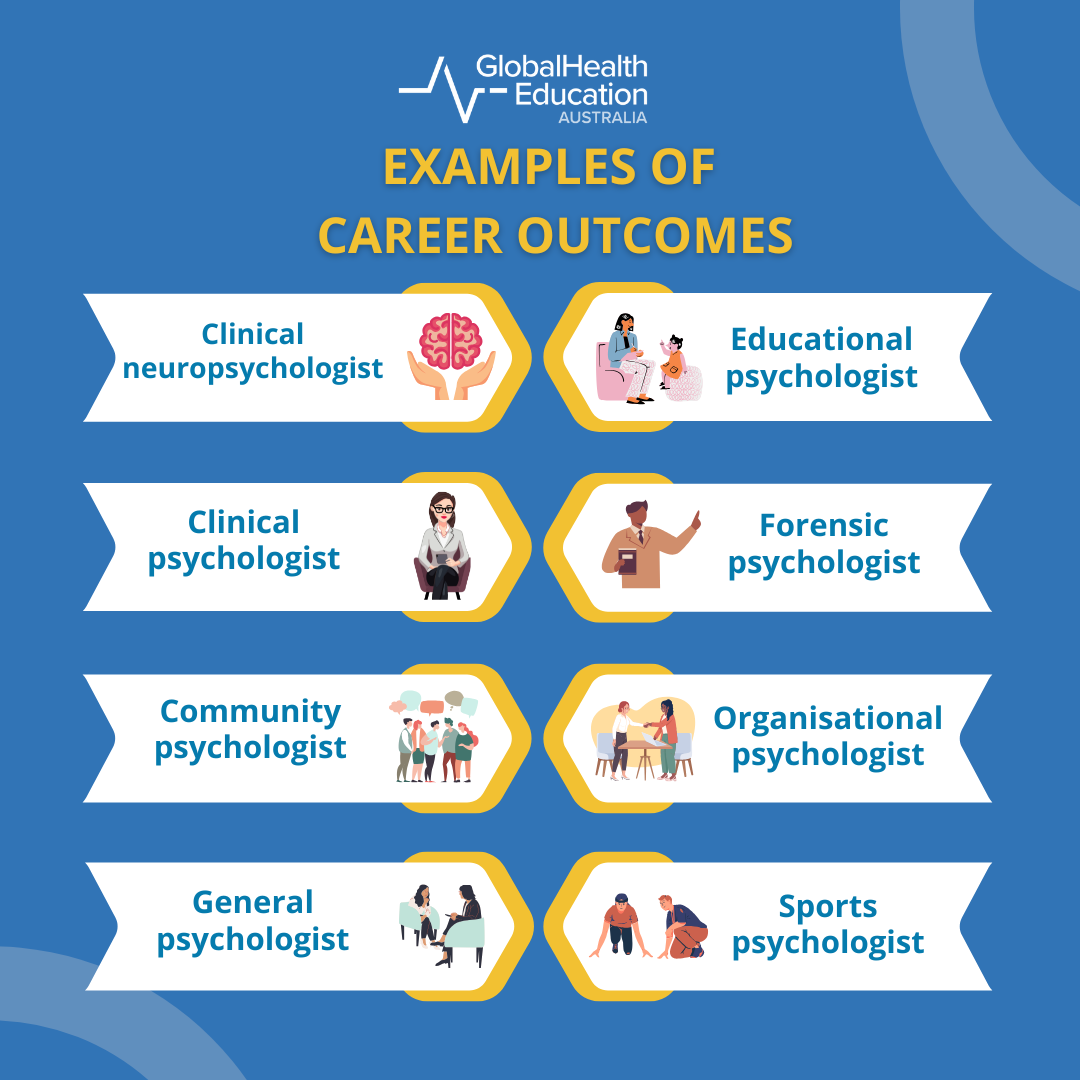
Completing your postgraduate studies in psychology can open doors to roles where you can continue to excel in a rewarding career. There are various clinical roles in psychology. You can obtain registration to work as a general psychologist or work in one or more areas of practice endorsement (AoPE).
Here are some career paths available:
Clinical neuropsychologist
Specialises in understanding how the brain’s structure impacts human behaviour and addresses psychological conditions including brain injuries, learning and cognitive disorders.
Clinical psychologist
Assesses, diagnoses and treats mental health, emotional and behavioural issues using psychotherapy techniques such as cognitive-behavioural therapy, supporting people with various mental health concerns including anxiety, depression or trauma.
Community psychologist
Works with vulnerable groups to improve wellbeing, addressing social, cultural and economic factors that influence people’s mental health.
Counselling psychologist
Counselling psychologists help people overcome challenges like grief, life transitions and relationship difficulties through different psychotherapy practices.
General psychologist
Operates within their professional scope of practice to provide psychological therapeutic interventions to support people navigating various mental health challenges.
Educational and developmental psychologist
Specialise in addressing social, behavioural and developmental challenges in children, adolescents and their caregivers, working to optimise children and young people’s learning and developmental outcomes.
Forensic psychologist
Professionals who combine their psychology and legal expertise to help people and organisations in the legal and criminal justice arenas to promote public safety.
Health psychologist
Focuses on the intersection of psychological, behavioural and societal factors and how these can impact health and disease. Health psychologists can work with people to encourage behaviour change regarding chronic health issues, stress and eating disorders to promote optimum health.
Organisational psychologist
Apply psychological principles to improve motivation, retention leadership and staff dynamics in private and public organisations or workplaces.
Sports and exercise psychologist
Help athletes in managing the emotional impact of injuries, performance anxiety, developing teamwork skills and mitigating burnout risk, working with individuals, coaches and group environments.
Sectors
Psychologists can make a meaningful impact across a variety of sectors:
Corporate organisations
Advising businesses and providing employee assistance, improving workplace dynamics and designing effective leadership programs.
Education
Opportunities exist in schools, universities and educational institutions where psychologists support students’ academic, social and emotional wellbeing.
Government and defence agencies
Assist in policy making, mental health program development and community-based initiatives at local and federal levels. Defence roles enable psychologists to help veterans recover from trauma, stress and other mental health concerns and support their reintegration into civilian life.
Hospitals
Help people with acute mental health issues, providing crisis intervention and therapeutic support. They may collaborate with multidisciplinary healthcare teams for comprehensive care.
Legal systems
Working as expert witnesses or supporting law enforcement and in correctional facilities to optimise the wellbeing of vulnerable individuals.
Public health
Health psychologists design public health campaigns and interventions and contribute to policy development.
Private practice
Psychologists in private practice offer tailored mental health services to individuals, couples and families.
Rehabilitation facilities
Supporting people recovering from addictions, injuries or other chronic health concerns through psychological interventions.
Research and academia
Advance the psychology field with teaching, research or academic roles at universities.
Sports teams
Sports psychologists support athletes and teams by enhancing performance, providing strategies for stress management and building mental resilience.
Salaries for postgraduate psychology careers
The average salaries for psychologists vary depending on experience, specialisation and postgraduate qualification level. According to SEEK and Talent.com, below are the average annual salaries for different psychology roles along with some employment growth trends where applicable.
Clinical neuropsychologist
Average annual salary: $113,000
Entry-level positions start at $108,000, while experienced workers can make up to $130,000 a year.
Clinical psychologist
Average annual salary: $115,000
Entry-level positions start at $105,000, while experienced workers can make up to $140,000 a year.
Projected job growth: 13.3 per cent over the next five years.
Community psychologist
Average annual salary: $102,000
Entry-level positions start at $93,000, while experienced workers can make up to $118,000 a year.
Counselling psychologist
Average annual salary: $119,000
Entry-level positions start at $106,000, while experienced workers can make up to $130,000 a year.
Educational and developmental psychologist
Average annual salary: $113,000
Entry-level positions start at $111,000, while experienced workers can make up to $178,000 a year.
Forensic psychologist
Average annual salary: $116,000
Entry-level positions start at $110,000, while experienced workers can make up to $130,000 a year.
General psychologist
Average annual salary: $105,000
Entry-level positions start at $95,000, while experienced workers can make up to $132,000 a year.
Projected job growth: 13.3 per cent over the next five years.
Health psychologist
Average annual salary: $108,000
Entry-level positions start at $95,000, while experienced workers can make up to $127,000 a year.
Organisational psychologist
Average annual salary: $120,000
Entry-level positions start at $111,000, while experienced workers can make up to $143,000 a year.
School psychologist
Average annual salary: $101,000
Entry-level positions start at $99,000, while experienced workers can make up to $144,000 a year.
Sport and exercise psychologist
Average annual salary: $88,000
Entry-level positions start at $77,000, while experienced workers can make up to $127,000 a year.
Frequently asked questions about postgraduate psychology courses
How long is a postgraduate psychology degree?
The duration of each course level varies in terms of time commitment, course structure and study load.
Graduate certificates
These courses are the quickest option and usually take four months full-time or between 8-12 months part-time to complete.
Graduate diplomas
Require a 12-month full-time study commitment or between 16 months to two years if completed part-time.
Master’s degrees
Often the most comprehensive course, typically taking two years part-time or 18 months full-time.
What are the differences between studying psychology online and on campus?
Completing your undergraduate degree usually includes a practical or work placement component, which requires in-person attendance. For example, the University of Canberra’s Bachelor of Science in Psychology is a three-year APAC-accredited psychology course delivered on-campus and involves work-integrated learning to provide practical experience in a real-world placement. It provides a pathway to further study toward becoming a psychologist.
When it comes to studying a postgraduate psychology course, the choice between online and on-campus learning is all about what works best for you. Both options lead toward accredited qualifications and provide the same learning outcomes.
Online postgraduate psychology degrees offer flexibility and are designed to fit in with your existing lifestyle, work and personal commitments. The advantage of self-paced learning means you can complete your studies when and where it suits you best. It could be ideal if you’re motivated to engage in the course materials, can work autonomously and enjoy having more control over your study schedule. It also suits those who don't live in close proximity to a university campus but still want to benefit from advancing their career with postgraduate study.
On-campus courses deliver a traditional, face-to-face learning experience and allows you to engage directly with the academic and support staff. It also provides an opportunity to connect in person with peers and build your professional network. It may be an ideal option if you want the enriching experience of on-campus learning and can work well adhering to a structured schedule of lessons.
There are many pros and cons of online vs on-campus courses and the decision between them will come down to what suits your study needs and lifestyle.
What are the prerequisites for a postgraduate psychology degree?
The entry requirements for postgraduate psychology degrees vary significantly depending on the individual course and university.As such, it’s important to check with your chosen university and what their specific course entry requirements are to make sure you can be considered and that you meet their prerequisites.
Entry into psychology graduate certificate courses at most universities require a bachelor's degree in any field, which may include psychology. Some universities explicitly require the completion of a bachelor's degree in a discipline other than psychology. If you don't have a bachelor's degree, equivalent prior learning may also be considered instead, which typically includes a minimum of five years of relevant professional experience.
Entry into psychology graduate diploma and master's level postgraduate courses at some universities may specifically require the completion of an APAC-accredited bachelor's degree with honours. Some universities also have weighted average mark (WAM) score requirements along with the above requirements, which can vary between 60-70 per cent at a minimum, depending on the individual university.
You may also need to be eligible for provisional registration with the Psychology Board of Australia. If you have an international qualification, this will need to be assessed for eligibility by the Australian Psychological Society (APS) to ensure it sufficiently meets the university’s education requirements. You also need to meet English language proficiency requirements set out by the university.
Additional entry requirements may also be applicable for some courses, which can include a personal statement, written references and completing an interview if your application for postgraduate study has been shortlisted.
It is important to note that meeting the academic requirements alone may not always guarantee entry into a postgraduate psychology course. If you have any concerns, seek advice from your chosen university about the specific course you’re considering.
How much does a psychology degree cost?
The cost of psychology degrees in Australia can vary depending on the institution and specific course level . Fees are usually listed per unit or as an annual figure and the total cost will depend on the units you complete. Here is an overview of the overall costs for least and most expensive postgraduate psychology courses at each course level from various universities in Australia:
Graduate certificates:
The least expensive graduate certificate is the Graduate Certificate of Psychology from James Cook University Online at $14,288, while the same course at Swinburne University is $14,840.
Graduate certificate average total course cost: $14,576.
Graduate diplomas:
The cheapest graduate diploma is the Graduate Diploma in Psychology from Western Sydney University at $16,992, while the same course at Swinburne University is $59,360.
Graduate diploma average total course cost: $35,034.
Master’s degrees:
Several universities provide CSP courses, with the most affordable option being the Master of Clinical Psychology at Griffith University, priced at $4,500.
Full-fee costs vary substantially for psychology master’s degrees. These courses range from $33,432 for the Master of Psychology (Clinical) at Australian Catholic University to the most expensive Master of Psychology (Clinical) at Bond University, which costs $90,840.
Master’s degree average total course cost: $62,013.30.
What are the payment options for postgraduate psychology course fees?
A few options are available to you when it comes to managing your payments for a postgraduate psychology course.
FEE-HELP is a loan scheme provided by the Australian Government to assist eligible students in covering their tuition fees for higher education. It is particularly relevant for postgraduate students enrolled in full fee-paying courses.
This scheme only applies to tuition fees, not other study-related costs like accommodation or textbooks. You can make voluntary loan repayments at any time, however, mandatory repayments apply once your income exceeds the repayment threshold, which changes each year. To be eligible for FEE-HELP, you must meet certain Australian citizenship, residency and enrolment requirements.
A Commonwealth supported place (CSP) is a subsidised university place where the Australian Government covers a portion of your tuition fees. These subsidies do not need to be repaid. Students in CSPs pay a reduced fee, known as the student contribution amount, which can be deferred using a HECS-HELP loan. CSPs are typically available for undergraduate courses but are also offered for some postgraduate programs in limited numbers.
If in doubt, check with the university directly to find out whether there are CSPs available for your course and to confirm your eligibility for FEE-HELP.
What skills do graduates gain by studying a postgraduate psychology course?
The skills you gain in a postgraduate psychology course will depend on the course level you’re completing.
Graduate certificates, graduate diplomas and psychology bridging courses cover broad and introductory psychology topics such as human behaviour, psychological development and counselling principles.
Master’s degrees in psychology provide advanced and more specialised skills that are readily applicable to real-world settings. These may include undertaking original psychology research and completing a thesis project, gaining practical experience through internships and preparation for registrar pathway and professional membership as a practising psychologist.
Here is a breakdown of some skills you may acquire from each postgraduate psychology course level:
Graduate certificate:
- Build a strong understanding of psychological theories, principles and historical developments
- Explore core areas such as cognitive psychology, developmental psychology, personality influences, social psychology and neuroscience
- Develop foundational skills in counselling, interviewing and professional communication
- Begin to develop ethical judgement, accountability and collaboration skills
- Apply evidence-based psychology to address challenges for culturally diverse populations on local and global levels
Graduate diploma:
- Understand and critique historical and contemporary psychological theories and models
- Assess theoretical principles and interventions for treating common mental disorders
- Evaluate psychological research, including test reliability, validity and ethical implications
- Differentiate between qualitative and quantitative research methods and apply appropriate methodologies
- Propose ethical research approaches within cultural, social, economic and political contexts
Master’s degree:
- Advanced Integration of developmental and biopsychosocial perspectives across the lifespan
- Knowledge of psychopharmacology and biological bases of severe mental disorders
- Critically evaluate evidence-based practices and conduct ethical and impactful research using expert research design and data analysis skills
- Apply psychological theories to real-world challenges, including mental health, education, organisational and multidisciplinary settings
- Treat clinical presentations using relational psychodynamic, cognitive-behavioural (CBT), systemic and narrative therapies to assess various presentations across the lifespan
What specialties are available for postgraduate psychology degrees?
The option to specialise in an AoPE occurs after the completion of general registration as part of a master’s degree. Psychologists can decide to undertake further studies in one or more AoPE areas, such as neuropsychology, educational and developmental psychology or forensic psychology.
Some broad examples of psychology degrees with specialisations in Australia include:
- Master of Business Psychology
- Master of Clinical Neuropsychology and Clinical Psychology
- Master of Organisational Psychology
- Master of Psychology (Educational and Developmental)
- Master of Psychology (Health Psychology)
- Master of Psychology (Sport and Exercise Psychology)
Is psychology a hard degree?
To know if psychology is a hard degree may require reflecting on your previous study and life experience and your specific motivations moving forward in your career.
The truth is, if you’ve already completed your undergraduate studies in psychology or another field, you’ve built a strong foundation and demonstrated your ability to succeed. Continuing on to advance your studies may be demanding, but with the right tools to navigate the study demands, it can be a worthwhile pursuit that opens doors to deeper expertise and meaningful career opportunities.
There is typically a combination of academic coursework, hands-on practical placement components and research units which require substantial dedication and a commitment of time, effort and money. Developing emotional resilience and adopting helpful self-care practices are important to successfully navigating the emotionally sensitive topics that a psychology degree covers.
You’ll need to take into consideration whether you can take on the workload and weigh up all the elements of pursuing postgraduate psychology education to determine the right next steps for yourself and your career.
Expand your psychology career today
Boost your career potential with a postgraduate online psychology degree. It can secure your future in one of the most rewarding and in-demand healthcare fields in Australia.
GlobalHealth Education partners with esteemed universities to deliver a diverse range of postgraduate psychology courses.
Each psychology degree is flexible and designed to fit with your career and lifestyle needs. Whether you’re looking to make a career change into the psychology field or upskill with additional qualifications in psychology theory and practice, you’ll find a course that’s right for you.
Browse the entire course catalogue above, select a course and enquire to connect with a Student Enrolment Advisor for support with your query and guidance on your enrolment process.
Looking for tailored advice? Book a professional development strategy call with our Education Consultant today and gain clarity on the best course or career pathway to suit your needs.