Why trust GlobalHealth Education?
-
Our in-house editorial team and healthcare advisors write and review our content.
-
The information in our content provides clarity and insights to help you compare courses.
-
We list postgraduate courses from 25+ respected and reputable institutions in Australia.
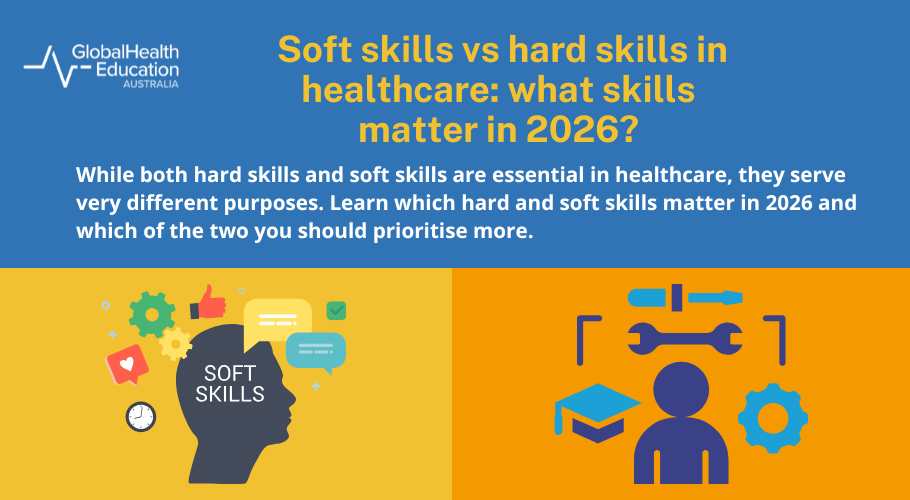
We’ve all heard of the terms “soft skills” and “hard skills”, but did you know that they date back to the 1950s? Coined by Paul G. Whitmore during his work with the U.S. military, he defined hard skills as the practical skills involved in operating military equipment and soft skills as the job-related capabilities that involved little to no interaction with machines.
While these terms are still widely used today, their meaning has evolved significantly. Hard skills are now understood as technical competencies, while soft skills are the interpersonal and behavioural capabilities that are viewed by many as difficult and challenging to get right.
As the healthcare industry enters an era defined by artificial intelligence (AI) and rapid digital transformation, which skills should you be developing to remain competitive? This article explores the hard skills and soft skills that matter the most for healthcare professionals in 2026 and provides tips on how to develop these skill sets effectively.
What are hard skills in healthcare?
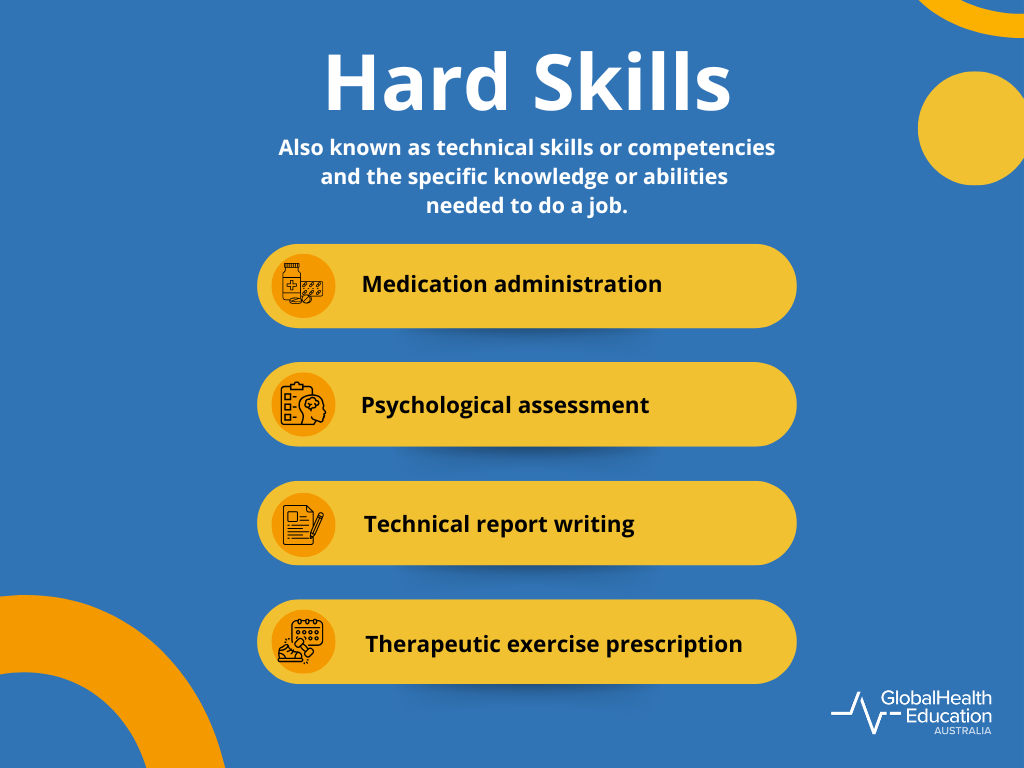
Hard skills, also known as technical skills, are competencies that you acquire through formal education, training or hands-on experience. They are what you’d typically list in the “skills” or “certifications” section of your resume. Hard skills involve knowing how to use specific tools and systems or performing certain tasks and processes needed to do your job effectively.
Hard skills are essential as they form the foundation of any role and ensure you have the technical capabilities to perform your duties correctly and safely. While some hard skills such as CPR, first aid and knowledge of medical terminology may overlap across healthcare roles, each profession typically has its own specialised toolkit.
Here are some examples:
Nurse
Hard skills that nurses typically have include:
- Medication administration
- Wound assessment and management
- Clinical documentation
- Clinical assessment
- IV therapy
Psychologist
For psychologists, hard skills may include:
- Psychological assessment and psychometric testing
- Diagnostic formulation
- Application of evidence-based therapeutic techniques
- Clinical report writing
- Research interpretation
Environmental health officer
Hard skills that an environmental health officer may possess include:
- Understanding and interpreting relevant legislation and regulations
- Assessing health hazards and risks
- Technical report writing
Physiotherapist
Hard skills that a physiotherapist may have include:
- Designing customised rehabilitation programs
- Therapeutic exercise prescription
- Equipment and technology expertise
- Research literacy
What are soft skills in healthcare?
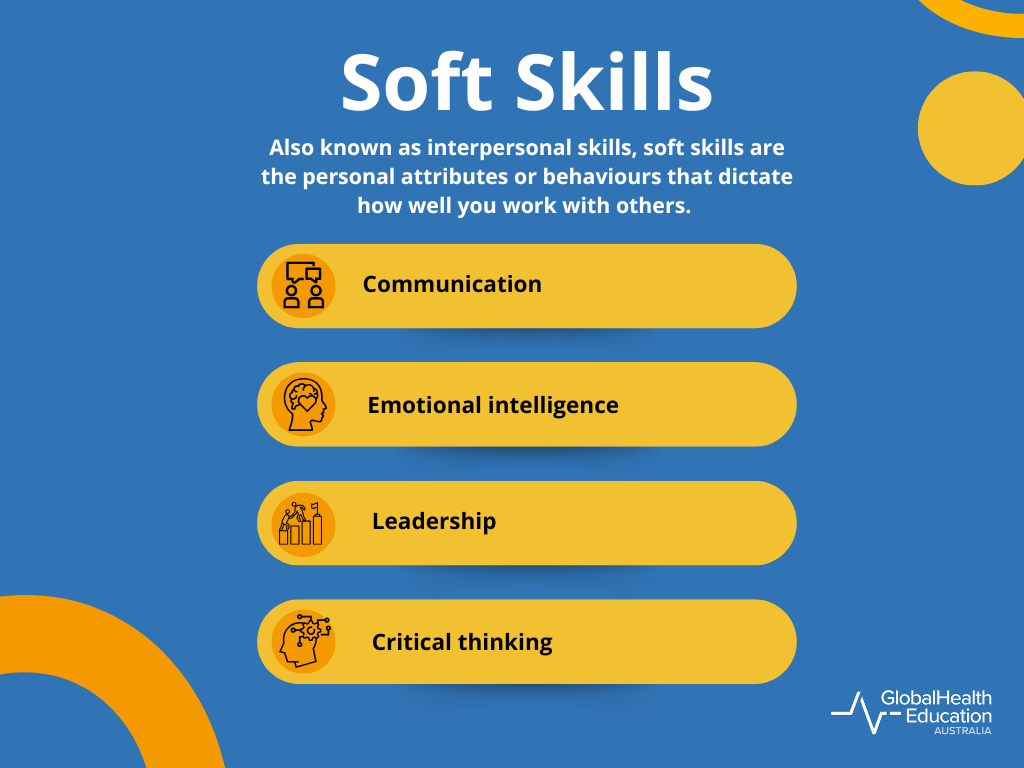
While hard skills are the technical competencies, soft skills are the personal attributes and qualities you possess that dictate how you engage with others. Soft skills are vital, especially in the healthcare landscape, as they play a significant role in determining client and patient relationships, team dynamics and workplace culture.
Unlike hard skills that may only be relevant to a particular industry or role, soft skills are typically transferable across roles and industries, making them incredibly valuable.
Some examples of soft skills in healthcare include:
- Communication
- Emotional intelligence
- Adaptability
- Critical thinking
- Leadership
- Cultural competence
- Resilience
Soft skills vs hard skills: at a glance
| Aspects | Soft skills | Hard skills |
|---|---|---|
| What they are | Interpersonal and behavioural capabilities | Technical, job-specific competencies |
| How they’re learned | Typically through experience, reflection, education and personal growth | Formal education, training, hands-on experience |
| Measurability | Difficult to quantify | Measurable |
| Transferability | Highly transferable across roles and industries | Often role or industry-specific |
| Automation risk | Difficult to automate | Can be automated or augmented by AI |
The most valuable soft and hard skills in 2026
Hard skills
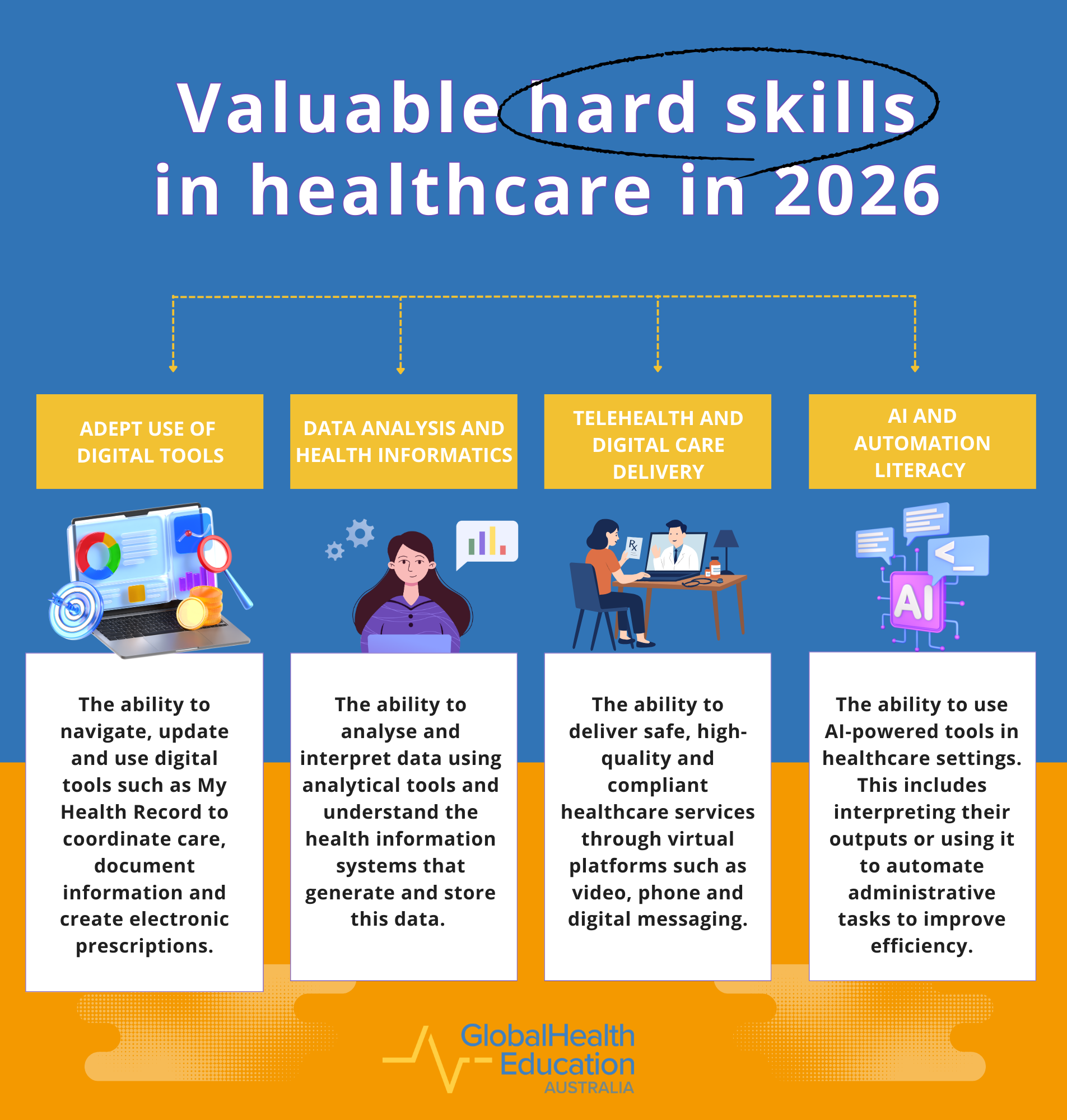
Most of the valuable hard skills for 2026 share a common thread: they’re all about adapting to a healthcare landscape that’s becoming increasingly digital, data-driven and technologically sophisticated.
Adept use of digital tools in the Australian health system
What it is: The ability to confidently navigate, update and use digital tools to document patient or client information, prescribe electronically and coordinate and communicate care across multidisciplinary healthcare teams. This includes documenting in and accessing shared electronic health records (EHRs) such as My Health Record and creating electronic prescriptions using conformant software.
Why it matters: Digital health plays a critical role in supporting patient care, improving patient safety and reducing wait times. It also enables a person-centred healthcare model that improves access to coordinated multidisciplinary care and management of complex and chronic conditions.
As of September 2025, there were approximately 24.5 million registered My Health Record profiles in Australia, compared to around 13.2 million in January 2020. The system now contains over 1.9 billion documents, including pathology reports, specialist letters and diagnostic imaging reports that are uploaded and viewed by healthcare professionals.
Having competencies in using these digital tools allows healthcare professionals to access patient and client information in real time across multiple settings, support faster clinical decision-making, improve continuity of care and increase efficiency and convenience.
Example: A general practitioner (GP)working in a rural general practice may see patients with multiple comorbidities who are also seeing several healthcare providers, so tracking medication changes, hospital admissions and treatment updates can be challenging. By using My Health Record, the GP can quickly access shared health summaries, discharge summaries and medication histories, helping to ensure safer, more coordinated ongoing care. After seeing the patient, they can also issue an electronic prescription, which is sent directly to the patient’s mobile device and dispensed at their local pharmacy.
How to improve this hard skill: There are guides, webinars and training resources available on the digitalhealth.gov.au website to help healthcare professionals learn how to use My Health Record and electronic prescribing systems. Many of these are also available as CPD-accredited e-learning modules, allowing professionals to build this skill while accumulating professional development hours.
Data analysis and health informatics
What it is: The combined ability to interpret healthcare data using analytical tools and understand the health information systems that generate and store that data. This includes data analysis, data interpretation, insight generation and data visualisation.
Why it matters: As Australia’s healthcare system continues to evolve, the volume, complexity and availability of data will only continue to grow alongside rapid advancements in health information technology.
While this data holds great promise, there is a growing need for healthcare professionals who can harness these digital tools and information sources and extract their benefits, particularly in areas such as clinical decision-making, public health policy and health research.
Examples: A nurse working in a hospital ward may analyse patterns from a patient’s history, blood test results and imaging data to identify early signs of deterioration and determine the most appropriate course of treatment.
A public health professional may analyse population-level health data to identify disease trends, population risk factors and emerging health concerns. These insights can guide targeted prevention strategies, early intervention programs and health policy decisions.
How to improve this hard skill: While there are free short courses available online, many universities also offer postgraduate study options in this emerging space. While s Short courses can provide you with an introductory understanding, whereas a postgraduate course is ideal if you’re keen on exploring the subject further or developing advanced expertise.
For example, Victoria University offers both a Graduate Certificate in Nursing Informatics Leadership and a Master of Nursing (Nursing Informatics Leadership), which includes specialised units and a research project. The University of Technology Sydney, also offers a Master of Public Health (Data Analytics), which covers areas such as biostatistics, epidemiology, qualitative research and visual analytics.
The courses below are listed by qualification level, from lowest to highest.

Connect nursing expertise with digital innovation. Learn to assess clinical information systems, align technology with nursing workflows and lead evidence-informed improvements in patient safety, care quality and digital practice.

Combine nursing expertise with digital health leadership to improve clinical systems, workflows, patient safety and technology-enabled care.


Uniquely blends advanced data science with real-world public health challenges, empowering professionals to drive evidence-based policy and innovation from anywhere in the world.
Looking to develop fundamental skills in health analytics? The University of Technology Sydney offers a Graduate Certificate in Health Analytics, which can be completed in eight months part-time and consists of units such as Data Visualisation and Visual Analytics and Fundamentals of Epidemiology.
Delivered 100% online with a diverse range of electives this course will help you develop the fundamental knowledge and skills to evaluate and apply health research and data.
Telehealth and digital care delivery
What it is: The ability to deliver safe, compliant and high-quality healthcare services through telehealth platforms, including video consultations, phone chats and secure digital messaging platforms.
As technology evolves, so too does the demand for telehealth services. According to Australia’s Digital Health Strategy, 118.2 million telehealth services were delivered to 18 million patients, with more than 95,000 practitioners using telehealth between March 2020 and July 2022.
Why it matters: Telehealth provides a practical alternative to traditional face-to-face consultations. It not only allows patients and clients to access healthcare services that they may not have been able to previously, but it also increases convenience, improves continuity of care and supports more flexible care delivery models.
By developing the skills required to confidently conduct telehealth consultations in line with professional guidelines and privacy requirements, healthcare practitioners can deliver competent, safe and high-quality care in digital environments.
Example: A counsellor may conduct telehealth consultations that require the use of secure video platforms. They would need to manage digital consent and identity verification while also troubleshooting basic technical issues such as connectivity, audio or camera faults. They must also ensure privacy compliance, manage electronic documentation and be able to navigate ethical and professional issues related to telehealth counselling.
How to improve this hard skill: There are many accessible courses available online to help build telehealth skills. Charles Sturt University, for instance, offers a free introductory telehealth course, while the University of Queensland Centre for Online Health provides a dedicated telehealth training portal for healthcare practitioners.
Alternatively, some universities also offer telehealth-focused units as part of their postgraduate course. For example, the Master of Counselling at Monash University includes a unit on Telehealth and Technology in Counselling, while the Graduate Diploma in Psychology at RMIT University includes a unit on Applied Telehealth and Virtual Care.
AI and automation literacy
What it is: AI and automation literacy involves understanding how artificial intelligence and automated systems operate in healthcare settings. It encompasses knowing how to use AI-powered tools to improve efficiency and processes alongside the ability to critically interpret their outputs.
Why it matters: According to Deloitte Australia, 75 per cent of leading healthcare providers are currently experimenting with data and AI solutions. In addition, 66 per cent of healthcare leaders believe they are ready for AI in healthcare, with many acknowledging that while AI can generate valuable insights, human interpretation is still required to ensure context and accuracy.
As AI increasingly supports administrative efficiency, automates routine tasks and enhances both patient and clinician experiences, it is becoming increasingly essential for healthcare professionals to upskill and learn how to work alongside AI.
Example: A radiologist may use AI to support image segmentation and quantification during medical imaging analysis, allowing them to focus more on higher-level medical interpretation. AI can also act as a second pair of eyes, serving as an adjunct to a radiologist’s decision-making by highlighting areas of interest or incidental findings they may have overlooked.
How to improve this hard skill: There are many short AI-related courses available online as well as workplace-based training sessions that introduce healthcare-specific AI tools. Healthcare professionals can also build literacy by participating in AI pilot projects and staying up to date with emerging industry trends, guidelines and ethical frameworks surrounding the use of AI in healthcare.
Soft skills

While hard skills focus on the technical capabilities required to work in healthcare, soft skills centre on the human, interpersonal side of care. In a way, soft skills help with balancing and softening the rigidity of hard skills by shaping how care is delivered, not just how it is performed.
According to the Hays 2025 Skills Report, the top four skills professionals believe they will need to develop over the next five years are communication (89 per cent), teamwork and collaboration alongside critical thinking and problem-solving (86 per cent) and adaptability and flexibility (84 per cent).
Communication
What it is: Effective communication involves the ability to exchange information clearly, accurately and in a way that ensures understanding. It draws on multiple skills, including active listening, empathy and the ability to explain information in ways that are easy to understand. It also involves adapting to different communication styles and accurately interpreting verbal and non-verbal cues such as tone of voice, body language and facial expression.
Why it matters: Communication is the foundation of every healthcare interaction. Healthcare professionals are constantly communicating with a wide range of stakeholders including patients or clients, families and other healthcare providers across multiple settings and formats.
Effective communication helps support better patient and client outcomes, reduces the risk of misunderstandings and errors, strengthens teamwork and builds trust.
Example: A physiotherapist working with a client would need to explain treatment goals, demonstrate exercises, check for understanding and adjust their communication style based on the client’s cognitive ability, emotional state and health literacy. By actively listening, communicating clearly and encouraging open discussion, it helps the patient feel comfortable, supported and confident in their treatment plan.
How to improve this soft skill: Communication skills are essential in healthcare, but they do not always come naturally to everyone. While practising in the workplace and actively seeking feedback are effective ways to improve one’s communication skills, healthcare professionals can also strengthen their skills through postgraduate study.
For example, the Master of Mental Health at Southern Cross University includes a unit called Management Communication that’s designed to help students become more effective communicators, writers and speakers.


Delivered part-time and online, this course is designed to prepare graduates to work within a wide range of health settings and disciplines.
Teamwork and collaboration
What it is: Effective teamwork in healthcare involves working collaboratively with others through clear communication, mutual respect, trust and having a shared sense of purpose. Through recognising the contributions of others and supporting each other, it helps to create psychologically safe teams that can problem-solve, make decisions and deliver comprehensive, coordinated care.
Why it matters: Just like communication, teamwork is a fundamental pillar of effective healthcare. Patients and clients often require care from multiple professionals across different disciplines and strong collaboration ensures that the care provided is seamless rather than fragmented.
Effective teamwork also contributes to a more supportive work culture, reduces burnout and strengthens resilience in high-pressure environments. When teams function well, healthcare professionals are also better equipped to respond to challenges and maintain high standards of care.
Example: A social worker supporting a client with complex needs may work closely with other healthcare professionals such as doctors, nurses and occupational therapists. This involves sharing timely and accurate information, working towards a shared goal and relying on the expertise of other healthcare professionals to ensure the client’s medical, psychological and social needs are addressed.
How to improve this soft skill: One of the most effective ways to strengthen teamwork and collaboration is to actively practise in the workplace. Healthcare professionals can also observe teams that work well together, reflect on what makes them effective and seek mentorship or constructive feedback to identify areas to improve on.
Postgraduate healthcare courses can also play an important role in developing teamwork skills. While there may not always be dedicated units focused solely on teamwork, many courses require students to work on group projects, case studies and assignments, all of which demand teamwork and collaboration.
For example, the Master of Social Work at Deakin University has a unit called Collaborative Practice in Healthcare where students will work in interprofessional teams and complete assessments and simulations together.
Critical thinking and problem-solving
What it is: Critical thinking and problem-solving go hand in hand and involve the ability to analyse information and evaluate assumptions to make sound, evidence-based decisions.
This involves formulating clear questions, assessing and interpreting relevant information and reaching well-reasoned conclusions. It also requires thinking open-mindedly and communicating effectively with others to explore different perspectives and possible solutions.
Why it matters: In an industry like healthcare, outcomes are rarely straightforward. Whether it be a psychologist, nurse, allied health professional or in public health, strong critical thinking and problem-solving skills are essential to navigate uncertainty, assess complex situations and respond appropriately across different healthcare contexts.
Critical thinking helps healthcare professionals adopt an investigative approach where they gather information, identify patterns and organise details into meaningful categories to support decision-making. The results of critical thinking and problem-solving can include greater patient or client safety, rational decision-making and coming up with innovative approaches.
Example: A nurse may be caring for a patient who initially presents with a collection of symptoms that appear to point to one likely cause, however, by continually reassessing the patient, asking further questions and dynamically reanalysing what they are observing in the moment, the nurse may begin to recognise that the symptoms suggest a different underlying issue.
How to improve this soft skill: While regularly using critical thinking and problem-solving skills in the workplace can help to refine these abilities, higher-level study, such as a postgraduate healthcare course can help with further honing these skills.
Analytical skills, critical thinking and problem-solving are often central to many postgraduate healthcare courses as they promote higher-level thinking and evidence-based decision-making. The Master of Public Health at the University of Canberra, for example, helps students develop the skills to critically analyse public health problems and design effective solutions.


Build the skills to analyse public health challenges, develop evidence-informed responses and improve population health through study in epidemiology, health promotion, policy, biostatistics and research.
Similarly, the Master of Advanced Social Work Practice at Charles Sturt University provides opportunities for social workers to strengthen their professional practice, including their critical thinking and problem-solving skills through research and advanced coursework.
Adaptability and flexibility
What it is: Adaptability and flexibility is the capacity to pivot when things change, whether that’s responding to changing patient or client needs, managing unpredictable situations or adjusting to new technologies and protocols. Encompassing traits such as resilience, resourcefulness, curiosity, persistence and emotional self-management, adaptability and flexibility are key to navigating uncertainty and change.
Why it matters: In today’s rapidly evolving healthcare landscape, healthcare professionals are required to continually adapt to technological advancement, workforce pressures and shifting models of care. With healthcare also being an inherently unpredictable field where a patient or client’s condition can change quickly, there’s a need for healthcare professionals to be able to react and adapt in real time.
Adaptability and flexibility also play an important role in professional wellbeing and long-term career sustainability. Being receptive to change, open to learning and willing to evolve helps safeguard against professional stagnation and supports healthcare professions to remain nimble, resilient and at the forefront of their field.
Example: A psychologist may begin therapy using one therapeutic approach based on the client’s initial presentation, however, as treatment progresses and new information emerges, the psychologist would need to adapt their treatment approach. Whether that means adjusting therapeutic goals, integrating new interventions or modifying the session’s structure, this adaptability and flexibility help ensure that the care provided remains responsive and aligned with the client’s evolving needs.
How to improve this soft skill: Adaptability and flexibility are best strengthened through exposure to change and reflective practice in the workplace. Seeking feedback, learning from challenges and reflecting on how one responds to change also supports ongoing growth in this area.
Formal study can also strengthen adaptability by developing critical reflection skills. Many postgraduate healthcare courses embed adaptability through experiential learning, project-based work and exposure to real-world scenarios.
If you were to do a Master of Counselling at Monash University, for example, you’d need to do 200 hours of counselling placement, which would expose you to different real-world scenarios. Similarly, the Master of Clinical Physiotherapy at Curtin University consists of clinical practice where you will be exposed to a variety of case histories.
Soft skills vs hard skills: which matters more?
While both are important, soft skills matter more in healthcare. It’s easy to assume that technical competence matters more in this AI-driven world, however, healthcare is fundamentally a people-focused profession and skills such as empathy, communication and teamwork remain central to the delivery of effective, high-quality care.
For example, a healthcare professional might excel technically and be able to navigate clinical systems flawlessly, deliver treatments precisely and follow every protocol. However, if they can’t communicate clearly with patients or clients, show empathy or collaborate effectively with colleagues, they’ll struggle to succeed. Without soft skills, even exceptional technical ability falls short.
The data backs this up. According to the Hays 2025 Skills Report, the top three skills hiring managers believe will be most important moving forward are all soft skills. Communication, teamwork and collaboration take the top spot at 84 per cent, followed by critical thinking and problem-solving at 81 per cent and adaptability and flexibility at 71 per cent.
The report also highlights where the biggest skill gaps currently exist. While technical and hard skills (57 per cent) take the lead, soft skills such as critical thinking and problem-solving (50 per cent), leadership and management (46 per cent) and communication (41 per cent) dominate the rest of the list.
While technical skills remain essential, it’s evident that soft skills take the lead in the digital age. They’re not only irreplaceable and highly transferable, but also difficult to automate or replicate through AI.
Ways to develop both skill sets
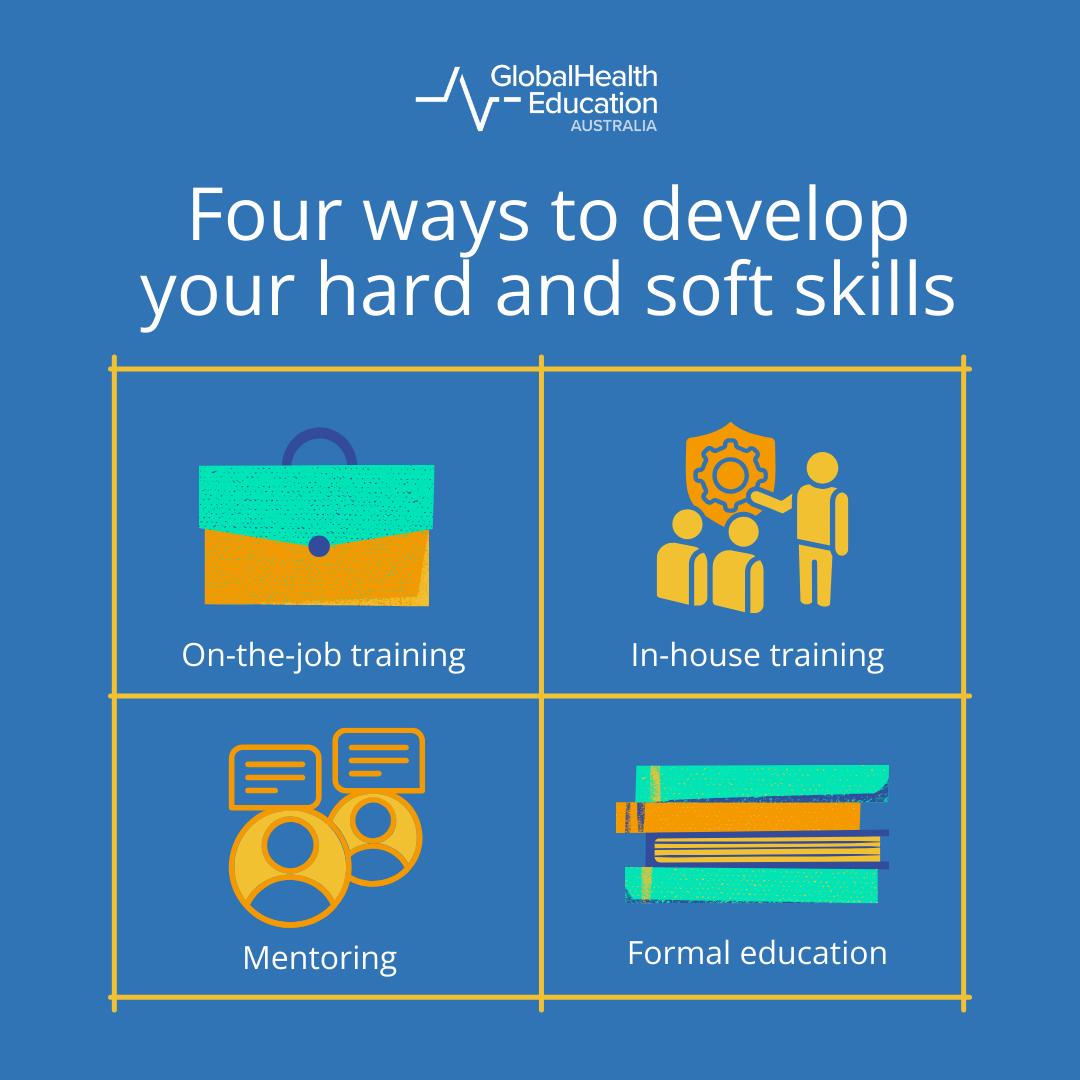
According to the 2025 Hays Skills Gap Report, there are several effective ways to develop both your hard and soft skills. These include:
On-the-job training
One of the most effective and practical ways to develop new skills is through on-the-job learning. An example could be a nurse learning how to use new medical equipment by shadowing an experienced colleague or a counsellor learning how to develop rapport with their clients by observing how a senior counsellor communicates and engages in their sessions.
In-house training
Many organisations offer structured training programs that allow employees to learn or sharpen their skills without leaving the workplace. Examples include hospital-run simulation sessions where nurses practice responding to deteriorating patients through roleplay scenarios or workshops to train staff on new digital health systems.
Mentoring
Mentorship can be a vital tool for helping healthcare professionals further develop their hard and soft skills. Mentors can provide guidance, support and valuable insights based on their own experiences. They can also offer personalised feedback, identify areas of improvement and suggest ways to further hone skills.
Formal education
Pursuing a postgraduate qualification such as a graduate certificate, graduate diploma or master’s degree is another effective way to strengthen both skill sets. As part of advanced study, healthcare professionals can develop technical expertise relevant to their practice while also engaging in peer-to-peer collaboration which builds communication, teamwork and critical thinking skills.
Build skills that future-proof your career
As the healthcare sector continues to evolve, your long-term success in the industry hinges on developing both technical expertise and human-centric skills. From AI and automation literacy to data analytics, communication, teamwork and adaptability, the most valuable soft and hard skills of 2026 reflect a sector that is becoming increasingly digital, but still reliant on the human touch required in healthcare.
While there are many ways to build your hard and soft skills, postgraduate healthcare courses remain one of the most powerful ways to invest in your future. At GlobalHealth Education, you can choose from over 60 postgraduate health and social care courses across disciplines including counselling, mental health, nursing, psychology, public health and social work.
Our Education Consultant, Catriona, is here to help. Book a free professional development strategy call with her to explore your options and receive expert guidance tailored to your situation.