In This Article
- What is addiction?
- Australia’s drug and alcohol addiction landscape
- Postgraduate addiction and mental health courses for healthcare practitioners
- What interpersonal skills are needed to work effectively in addiction care?
- Working in addiction-focused care: Rewards, challenges and strategies for success
- Upskill with an addiction counselling and mental health course today

Why trust GlobalHealth Education?
-
Our in-house editorial team and healthcare advisors write and review our content.
-
The information in our content provides clarity and insights to help you compare courses.
-
We list postgraduate courses from 25+ respected and reputable institutions in Australia.
Trigger warning: This article covers themes related to addiction, abuse, trauma and mental illness, which may be distressing for some individuals. Reader discretion is advised.
The impacts of addiction are widespread, affecting the physical, social and mental wellbeing of individuals, families and communities. In Australia, alcohol and other drugs contribute to a variety of health conditions, accounting for 14 per cent of the country’s total disease burden. The prevalence of addiction and related mental health conditions calls for a skilled healthcare workforce and services where professionals can provide compassionate and recovery-oriented care.
If you’re considering working in the field of addictions and mental health care, postgraduate study offers a valuable pathway to upskill, enabling you to deepen your understanding of addiction, strengthen your clinical and therapeutic skills and respond more effectively to multifaceted client needs.
In this article, we explore the current landscape of addiction in Australia, the skills and qualities needed to succeed in this field and various postgraduate addiction courses available to build your expertise. We also share expert insights to help guide your process if you’re thinking about a career in this complex healthcare area.
What is addiction?
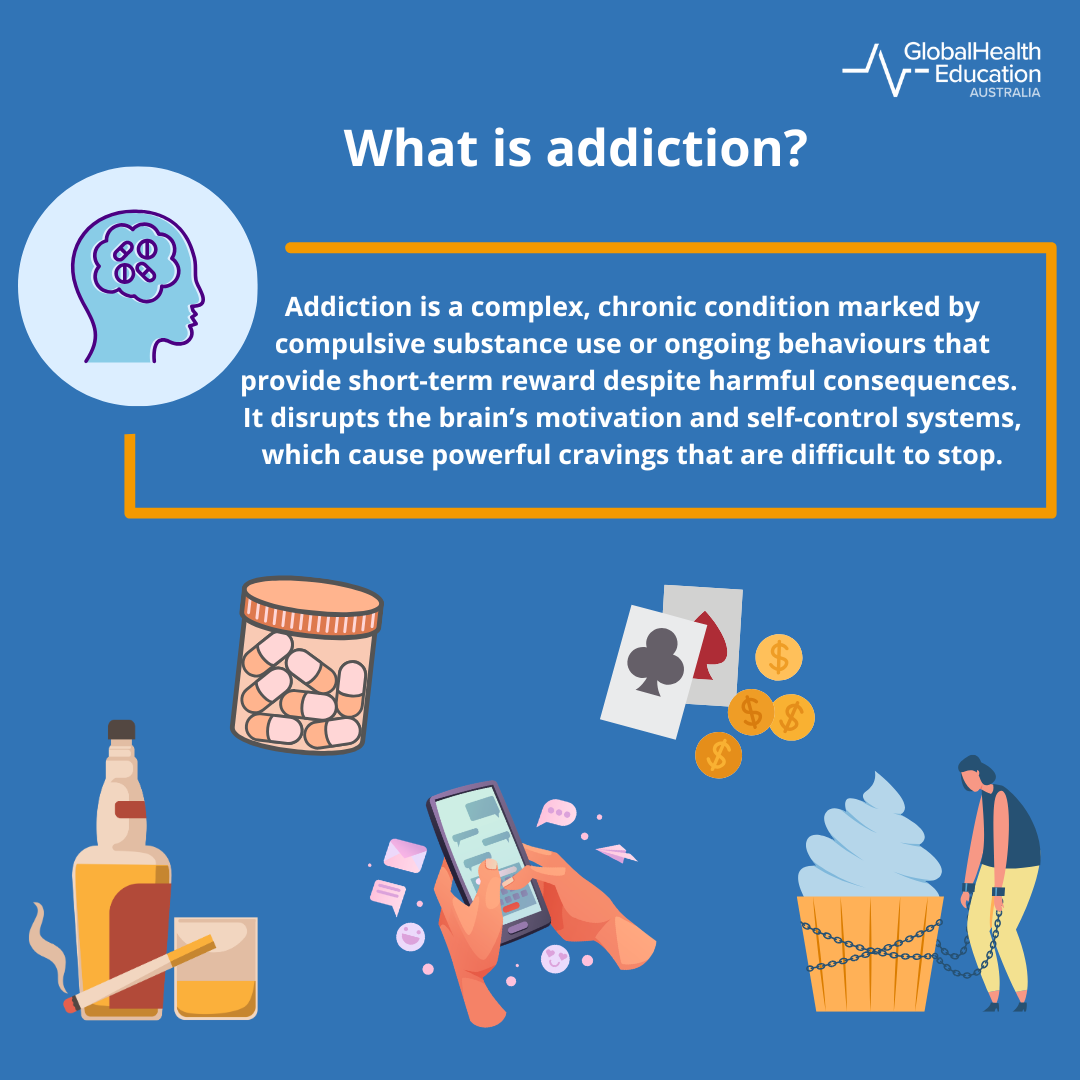
Addiction is defined as a complex, chronic condition characterised by the compulsive use of substances or engagement in behaviours that deliver immediate rewards, despite their likely harmful consequences.
The effects of addiction impact the brain’s reward, motivation and self-control systems, which are manifested as strong urges or cravings and a high amount of time spent on the activity itself. As a result, it may be very challenging for individuals to stop, even when they genuinely want to.
What are the different types of addictions?
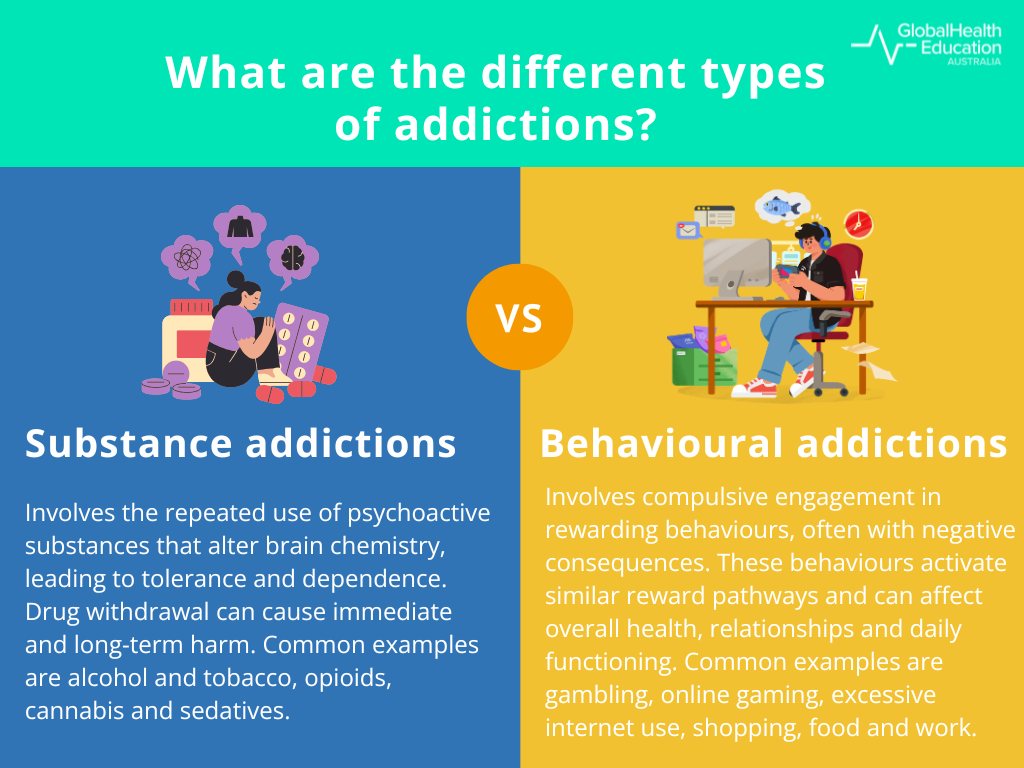
Addiction typically falls into two categories: substance addictions and behavioural addictions.
Substance addictions
This is likely the most well-known type of addiction in mainstream culture. It involves the ongoing use of psychoactive substances that alter brain chemistry, reinforce reward systems and result in increased tolerance and dependence. Substance addictions can be due to pharmaceutical or illicit drug use and can cause intense physiological withdrawal effects and long-term harm. Examples can include alcohol, nicotine, tobacco, opioids, stimulants, cannabis, hallucinogens and sedatives.
Behavioural addictions
This category of addiction is becoming more prevalent in today’s culture. Behavioural addictions are characterised by the compulsive engagement in rewarding behaviours that commonly have negative consequences. The impacts of behavioural addictions may be seen on an individual, family or societal level and may be less obvious to spot. While no substance is ingested, behavioural addictions activate similar reward pathways in the brain and can have comparable impacts on mental health, relationships and daily functioning. Examples can include gambling, online gaming, excessive internet, phone or social media use, shopping, food and work.
Signs and symptoms of addiction
Some frequently observed signs and symptoms of addiction include:
- Physical symptoms: seen more often in substance addiction and can include withdrawal symptoms, sleeplessness, appetite changes, skin, weight or appearance changes
- Psychological changes: intense cravings and anticipatory thoughts about the substance or behaviour, coupled with loss of control over these urges, despite knowing the harm it may cause
- Behavioural changes: secrecy, lapse in responsibilities, changes in routines, prioritising the addiction over other commitments, including family, work and relationships
- Emotional changes: mood swings, anxiety, depression, shame or guilt, which are commonly displayed when the substance or behaviour is limited or unavailable
Australia’s drug and alcohol addiction landscape
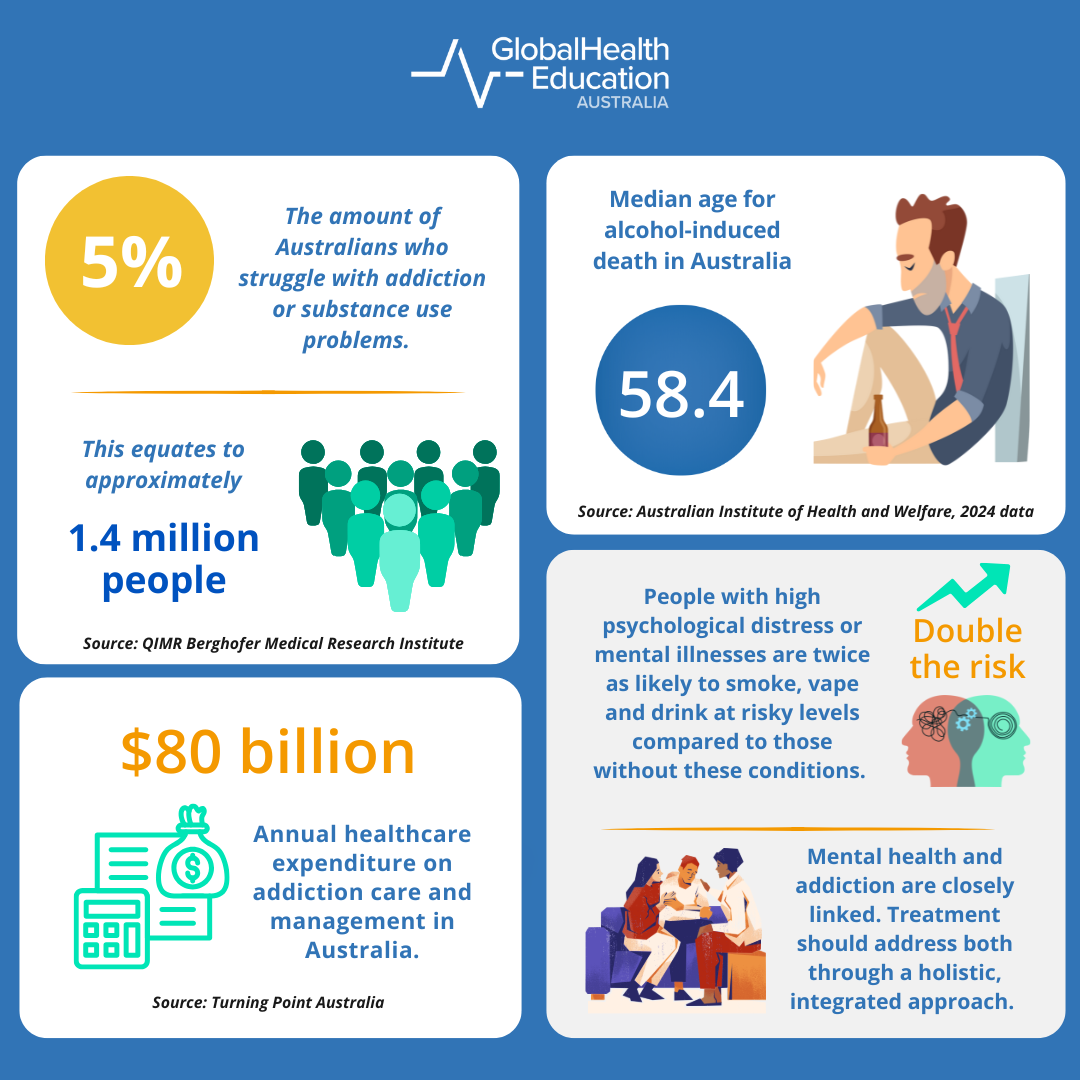
Addiction remains a significant public health issue in Australia. According to the QIMR Berghofer Medical Research Institute, more than 5 per cent of the population struggles with addiction or substance use problems, which is approximately 1.4 million people.
Mortality rates are also commonly linked to addiction and substance misuse. In 2024, around 146,000 hospitalisations were due to alcohol or other drugs. Alcohol-related illnesses cause more deaths compared to any other substance. ABS data shows the median age of alcohol-induced death in 2024 was 58.4 years.
Smoking and tobacco use contributed to 7.6 per cent of the total disease burden, which includes cancers, respiratory diseases and cardiovascular disease. These substances are among the most widely used in Australia and are a primary cause of preventable death.
Importantly, the impact of addiction extends beyond the health of the individual, with an estimated economic burden on the country, which costs around $80 billion annually. There are substantial negative impacts on workplace productivity, pressure on healthcare resource allocation and strain on families and communities.
The link between addiction and mental health conditions
There is a bidirectional link between addiction and mental illnesses, including depression, anxiety, bipolar disorder and schizophrenia. Here, these conditions create a higher predisposition toward substance use and addictive behaviours and the effects of addiction can cause perpetual aggravation of mental health issues.
In 2025, the Australian Institute of Health and Welfare revealed that individuals with high markers of psychological distress or mental health challenges were twice as likely to smoke tobacco or vape and were overall more likely to consume alcohol at dangerous levels compared to individuals without these issues.
Due to the closely connected nature of mental health conditions and addiction, effective healthcare responses and treatment should ideally address both issues together. Rather than treating mental health and addiction as separate concerns, effective care looks at the whole person and the factors that shape their wellbeing.
Skilled practitioners are key to this process, offering informed, compassionate and recovery-oriented care, adjusting their approach as needs change throughout the treatment and recuperation process. This holistic approach, incorporating prevention, treatment, counselling and ongoing support, gives people the best chance of a meaningful and lasting recovery.
Postgraduate addiction and mental health courses for healthcare practitioners
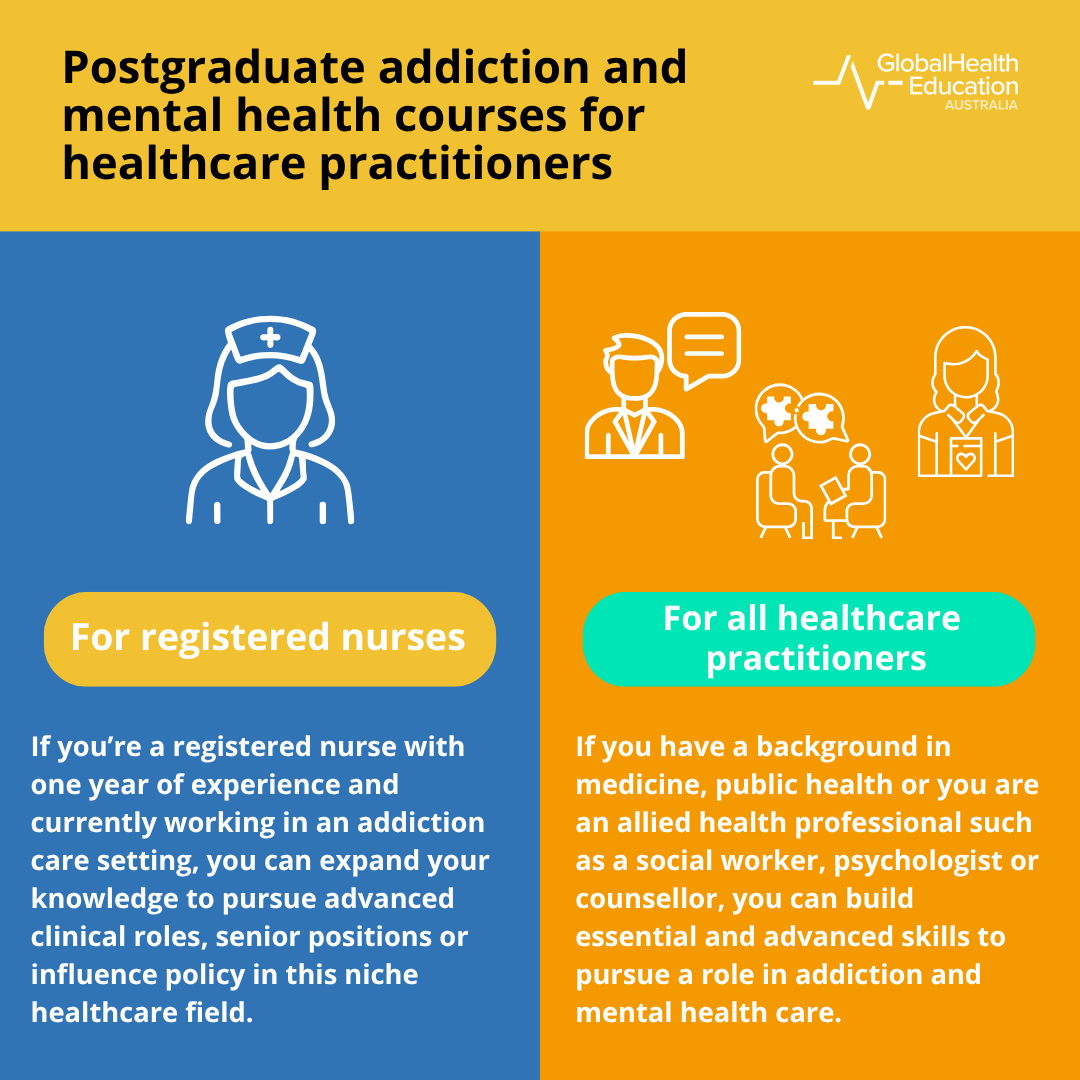
Who are these courses for?
Several universities offer graduate certificates, graduate diplomas and master’s degrees in the field of addiction that are available to anyone with a minimum undergraduate degree. Some course entry requirements state that undergraduate degrees can be from any field, while others stipulate that they must be in a health-related discipline.
Related fields of study may include nursing, medicine, public health, social work, counselling or psychology. Other allied health professions, such as exercise physiologists, dietitians, speech pathologists and occupational therapists, are also considered eligible related fields of study for entry into these postgraduate courses.
If you have a background in social sciences, police work, criminology, law or education, you may be eligible to complete a postgraduate degree in addiction and related counselling care to augment your work in these roles or use the qualification as a launchpad to move into the healthcare sector.
Some postgraduate courses are available only to registered nurses with at least one year of clinical nursing experience and current employment in the area of addiction and substance use. These courses can help nurses progress toward advanced practice or leadership roles in addiction care by expanding their knowledge of this field.
Below is an overview of postgraduate courses in addiction studies, care and counselling relevant to nurses and other healthcare professionals. Each course provides an opportunity to gain advanced expertise and to work clinically with people struggling with addiction.
What do you learn in a postgraduate addiction course?
Postgraduate addiction courses provide a comprehensive understanding of addiction from biological, psychological, social and public health perspectives.
Some key things you’ll learn from completing these courses include:
- An advanced understanding of the basis of addiction, including neurobiology, pharmacology and the effects of physical substances on the body
- Insights into the psychological and sociological underpinnings of addiction, such as trauma, mental health comorbidities and various social determinants
- Trauma-informed and culturally-aware counselling techniques to effectively support diverse groups
- How to apply evidence-based treatment approaches, which, depending on the course and your scope of practice, may include pharmacotherapies, psychological interventions and relapse prevention strategies
- Leadership and advocacy skills to influence public health policies and improve addiction care systems
- The ability to critically evaluate evidence-based practices for optimal outcomes in addiction care using strong research and analytical skills
- Practical, real-world experience through case studies and a capstone project if completing a master’s degree
Where can you work once you've completed a postgraduate addiction course?
With jobs in this sector expected to grow by 14.2 per cent over the next five years, these courses prepare you with adaptable skills that can be applied across diverse healthcare settings, including:
Allied health centres and multidisciplinary clinics
Work in these environments may include collaborating with GPs, psychologists or other health professionals to provide comprehensive and multidisciplinary care for those with addiction challenges. Depending on your role, you may contribute to a shared treatment plan or work independently and liaise with other providers as needed.
Correctional facilities and law enforcement
Your role may involve individual or group counselling, rehabilitation and reintegration support. Work may also include collaborating with correctional officers or legal professionals in the criminal justice system, as well as broader healthcare professionals, as relevant.
Government agencies, public health and policy advisory roles
You can be instrumental in shaping health prevention and education programs that relate to reducing substance-related harm or behavioural addiction awareness. This work typically involves research, planning, data analysis and advocacy work at a community, state or national level.
Mental health and telehealth services
These roles may suit counsellors, psychologists or mental health social workers. You’ll typically provide support and counselling, which may include individual or group sessions, crisis intervention and ongoing care. Depending on the role, these may be in-person or via telehealth services for a wider reach to vulnerable community members.
Occupational health services
You can help support people returning to work following addiction recovery through education, counselling and collaboration with employers. This work could be through insurance companies or external organisations to encourage safe return-to-work and promote employee wellbeing.
Private practice clinics
If you work as a sole practitioner in private practice, you may offer one-on-one, tailored counselling support services. In this context, you may have a dedicated practice for addiction care and recovery where you manage your own clients, develop individual treatment plans and utilise referral networks as needed.
Public and private hospitals
These roles may be suitable to a variety of healthcare professionals, including registered nurses with advanced knowledge of addiction care. You may be responsible for delivering acute care, assessing patients and providing short-term interventions for substance-related issues. You may also work alongside interdisciplinary and multidisciplinary teams in emergency departments, hospital wards or in outpatient care, depending on the specific setting.
Rehabilitation centres
Facilities that are specifically structured to support people through their recovery commonly employ a variety of professionals who specialise in addiction care. You’ll play a vital role in guiding people through longer-term recovery and wellbeing through education and relapse prevention support. You may also liaise with community or social workers for reintegration support.
Research and academia at universities or research institutions
Engaging in research and education to advance the understanding of addiction, improve treatment approaches and inform policies is another viable pathway for those with advanced expertise in addiction, mental health and recovery. These roles may be available through universities and research institutions that support innovation in addiction care.
Social work settings, community health and non-profit organisations
Roles in community and social work settings involve supporting vulnerable individuals and communities struggling with addiction and addressing complex social challenges. This could include providing community outreach, case management, advocacy and connecting clients with essential resources like housing, employment, financial services and other social supports.
Postgraduate addiction studies courses for nurses
This postgraduate addiction course is aimed at registered nurses interested in building a deeper understanding of substance use from an individual and public health standpoint. This is a 12-month course, delivered part-time and online. It comprises four units that establish the foundational concepts of the impacts of alcohol and other drugs, as well as health promotion and harm reduction strategies for patients within a nursing context.

Acquire the knowledge and skills necessary for providing and coordinating person-centred care in this expanding field.
This graduate diploma is for registered nurses looking to develop their expertise in addiction and related mental health care. The course is delivered online over 24 months at a part-time study load. Units such as Assessment and Management of Addictive Disorders and Psychological Therapies in Mental Health Care deliver in-depth theoretical knowledge and clinical reasoning capabilities.


Offers a specialised, interdisciplinary approach that empowers nurses to navigate the complexities of substance use care with empathy, clinical precision and advocacy for long-term recovery.
The above course provides a pathway toward the Master of Advanced Nursing (Addiction Studies) and offers comprehensive skills in nursing addiction care. This course is delivered part-time over three years and after completing the core units, you can choose your own pathway for the second and third years of study.
Customising this master’s degree with a nursing coursework, research or advanced practice pathway gives you the flexibility to shape your studies depending on your interests and career goals. It may be an ideal option for nurses who want to pursue senior clinical roles, lead teams or influence policy in the field of addiction and rehabilitation.

Acquire specialised knowledge and skills to support individuals facing substance use disorders, focusing on prevention, intervention and recovery.
Postgraduate addiction studies courses for all healthcare practitioners
For those with a background in healthcare, this online graduate certificate may be an ideal way to upskill in the field of addiction care. This program is a 12-month, part-time online course, comprising two units: Drug Effects and Biology of Addiction, and Pharmacotherapy and other responses to drug problems. This course is suitable for anyone with a nursing, health, social services, p ublic health or allied health background who is interested in understanding the complex biopsychosocial aspects of addiction and the relevant interventions.


Develop awareness of special populations and ethical considerations in treatment.
For a more advanced qualification, consider Adelaide University’s Graduate Diploma in Addiction and Mental Health. This online course expands on the graduate certificate course to deliver in-depth knowledge of the psychological and pharmacological approaches to treatment in addiction care. The additional two units include Mental Health and Co-existing Addiction and Mental Health Disorders. This course is well-suited to you if you are in a clinical care role with a counselling or social work background, where you can apply your advanced knowledge to offer individual or group support for those struggling with addiction.

Explore culturally sensitive, ethical and person-centred approaches to care.
The Master of Science in Addiction Studies is delivered online and provides graduates with a comprehensive understanding of both the biology of addiction and the public health concerns surrounding addiction, rehabilitation and appropriate interventions. It may be ideal for those with an allied health, counselling or other healthcare background, which can include nursing.
As part of your studies, you’ll undertake a research project to demonstrate your knowledge of this healthcare area. Upon completion of this master’s degree, you’ll be equipped to pursue clinical roles and you may also seek roles in non-profit organisations and government sectors, impacting health policies in addiction, substance and mental health rehabilitation programs.

Gain the skills to influence public health initiatives and policy while building valuable professional connections to prepare for specialised roles in healthcare, non-profit and government sectors.
University of Southern Queensland
This graduate certificate is a flexible study option for a variety of healthcare practitioners, such as existing counsellors, social workers or allied health professionals. It comprises four units, including Trauma-Informed Care and Practice, Presenting Issues and Mental Health, Counselling and Diversity Across the Lifespan, and Working with Addiction. It’s ideal for those interested in gaining specific counselling skills that support the holistic recuperation and wellbeing of those struggling with addictive behaviour and mental health challenges.


Offers a focused and flexible pathway for professionals to gain specialised skills in addiction support, blending evidence-based strategies with real-world application to make a lasting impact in communities.
This course is for health professionals working in healthcare settings, such as hospitals, private practice, aged care settings or community services. It is delivered online over three years at a part-time study load. It’s well-suited to those seeking to better understand the psychology and practice of addiction at a foundational level. It contains units focused on addiction contexts, advanced assessment and psychological interventions. It provides a solid basis for those passionate about building their clinical practice to support people in their recovery, as well as professionals looking into community health or interdisciplinary care roles.

Offers a cutting-edge, interdisciplinary journey into the science and psychology of addiction, equipping practitioners to lead compassionate, evidence-informed care in a rapidly evolving field.
What interpersonal skills are needed to work effectively in addiction care?

Working effectively in addiction care requires a strong set of interpersonal skills.
Principal psychologist Luke Lawrence has extensive experience in supporting people in their addiction and recovery in his Geelong-based private practice. He applies both the medical model and psychological frameworks to better understand addiction and implement appropriate interventions for his clients.
Luke’s advice for professionals who want to work in this field is to develop strong empathy skills, demonstrate genuine compassion, establish healthy professional boundaries and engage with clients in a non-judgemental manner. Below are some of the necessary capabilities required of practitioners in this sector.
To be successful in these roles, you’ll need to:
Adopt a trauma-informed approach
Cultivating a trauma-informed approach is an important part of delivering meaningful care to people struggling with addictions. Individual experiences throughout their lives, including during childhood, can affect how people interact with healthcare professionals and the systems from which they seek care. It’s important to try to create a therapeutic environment that is safe, offers choice and prioritises empowerment for people on their road to recovery. You’ll have a greater chance of building trust and rapport, leading to more positive outcomes where clients and patients feel respected and understood. H3:
Advocate for your clients or patients
Developing strong patient advocacy skills in your nursing role or other healthcare role is essential. This means as you support them through a vulnerable struggle in their lives, you’ll be a voice for them, educate them and protect their rights. This may include helping individuals navigate the healthcare system, communicating clearly and transparently with them and supporting them in their decision-making process. Effective advocacy empowers people to be active participants in their own health and recovery.
Become an effective communicator
Effective communication skills are vital for building rapport, explaining the available treatment options and collaborating with people as they navigate the evolving path of their recovery. This skill is also necessary for working well with multidisciplinary care teams who may be involved in other aspects of their health and wellbeing. Such professionals may include mental health social workers, psychologists, occupational therapists and general practitioners. Understanding your own and others’ communication styles can also support better cohesion, promote responsive care, while also reducing the likelihood of misunderstandings and clinical errors.
Enhance your capacity for empathy
Building empathy skills can help you put yourself in your client or patient’s shoes, allowing you to better understand and validate their experience. As a healthcare professional, you may already be naturally empathetic, which supports your ability to deliver compassionate care without judgement. This will enhance your work as you help people struggling with the challenges associated with addiction. Demonstrating empathy can help strengthen the therapeutic alliance and foster trust. When clients feel genuinely understood and have targeted support for their specific addiction, they may feel more likely to engage in treatment and actively work toward their recovery goals.
Develop cultural competence
Cultural competency skills are also important to be effective in your role in addiction-focused care. This important skill involves understanding and respecting individuals’ cultural identities, values and beliefs, which enables you to work effectively with diverse populations, including Aboriginal and Torres Strait Islander peoples. Implementing culturally aware care requires a level of adaptability, as you’ll need to adjust your approach to individual needs. It’s also helpful to reflect on your own cultural preconceptions that may be affecting how you interact with people and your ability to make appropriate assessments to be the most impactful in these roles.
Strengthen your professional boundaries
Having strong professional boundaries is a must when it comes to providing care in any healthcare role. Boundaries help you provide consistent, structured, safe and professional care that helps protect both you and the people you help on their road to recovery. It forms part of your ethical practice, which clearly defines the roles and responsibilities of both practitioner and the individual. It reduces the risk of the interactions becoming overly personal. It also protects against the risk of compassion fatigue and burnout, which commonly arises for certain healthcare professionals, including nurses and psychologists.
Build resilience in your practice
It’s also important to develop resilience when supporting individuals in addiction recovery. This is because the work can be emotionally demanding, complex and may occur over a long period of time for people. You’ll likely be helping people who experience relapse, who may also be navigating welfare problems, such as secure housing or employment, while in your care. These people may also be dealing with concomitant mental and physical health issues that complicate their recovery process. The slow and fluctuating healing process can be taxing on health practitioners if not managed effectively. Developing resilience allows you to protect your own wellbeing while ensuring you can continue to provide high-quality and consistent care to your clients or patients.
Working in addiction-focused care: Rewards, challenges and strategies for success
A role in addiction care, whether it’s nursing, social work, counselling or allied healthcare, can be both highly rewarding and challenging.
Rewards
One of the key rewards of working in addiction care is the opportunity to make a meaningful difference in people’s lives. Supporting individuals through recovery, reducing the risk or impact of harm and supporting relapse prevention can have a profound impact on the people you help, their loved ones and the communities in which they live.
Professionals in this field also develop highly transferable interpersonal skills, such as empathy, communication, critical thinking and patient advocacy, which are valuable across many healthcare and social service settings. Moreover, addiction-focused roles often offer variety, as practitioners may work with diverse clients of different ages and cultural backgrounds. You’ll also have the opportunity to collaborate with multidisciplinary teams to help your patients or clients address a wide range of psychological, social and physical health issues. Job variety can contribute to greater satisfaction at work and help make the role feel more fulfilling.
Challenges
However, there are also significant challenges associated with this area of practice. The work can be emotionally demanding, as practitioners are frequently exposed to vicarious trauma and the complex life circumstances of clients and patients. This emotional load increases the risk of professional burnout.
Supporting clients through a slow and non-linear recovery process, where relapse may be common, can be frustrating and emotionally taxing for professionals. As Luke reiterates, “Recovery isn’t glamorous… Many people find they manage recovery for the rest of their life.” The complexity of health needs, including mental health issues, chronic illnesses and welfare concerns, also adds to the challenging aspects of these roles.
How to build long-term success in addiction care
For continued growth and success in addiction therapy roles, it’s essential to practice self-care and recruit as much support from supervisors, peers and colleagues who can provide guidance as your expertise on this path evolves. This may be especially true for younger practitioners. Having a supervisor you can talk to and lean on to help navigate challenges with clients is vital.
As Luke shares, “Specialist training is important [as] every client presents differently… education is really important to understanding addiction models.” You can equip yourself with the expertise to provide evidence-based, compassionate care through specialised postgraduate studies in addiction care.
Upskill with an addiction counselling and mental health course today
The need for skilled healthcare practitioners, nurses and professionals to support people in their mental health, addiction and recovery journeys continues to grow. Gaining a postgraduate qualification in addiction care can enhance your confidence and clinical impact, opening up career opportunities in a variety of settings.
At GlobalHealth Education, we offer postgraduate healthcare courses from many respected Australian universities, including our partner universities, in a range of fields. Explore courses in health leadership, psychology, nursing, public health, counselling, social work, mental health and more. You’ll find courses to suit your career and lifestyle that are delivered both online and on-campus in flexible learning formats to help you advance your career.
If you’re ready to take the next step in your career but aren't sure which course aligns best with your goals, book a free professional development strategy call with Catriona, our Education Consultant. She can help you navigate your options and find a course that best fits your professional needs.