Why trust GlobalHealth Education?
-
Our in-house editorial team and healthcare advisors write and review our content.
-
The information in our content provides clarity and insights to help you compare courses.
-
We list postgraduate courses from 25+ respected and reputable institutions in Australia.
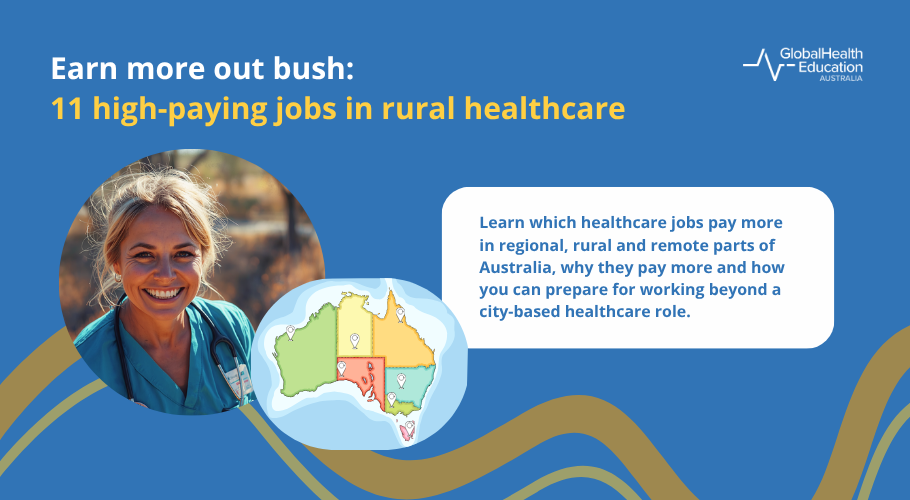
A 2024 study conducted by the Regional Australian Institute found that, after housing costs were considered, median incomes in remote and very remote areas were 12.8 per cent and 13.6 per cent higher, respectively, compared to incomes in major cities. These higher earnings are seen across many rural healthcare roles, particularly in primary health, allied health and other areas experiencing strong demand.
While a move out bush may not be for everyone, with some preparation and willingness to embrace a different lifestyle, it offers a unique and rewarding career opportunity. You’ll become a vital part of a close-knit community and boost your earning potential while you’re at it.
This article explores some of the high-paying rural jobs in healthcare compared to urban cities. You’ll also learn how to prepare for the lifestyle and career shift that accompanies these roles and what postgraduate courses help pave the way into rural healthcare, which may attract higher salary potential.
Why rural and remote healthcare jobs pay more
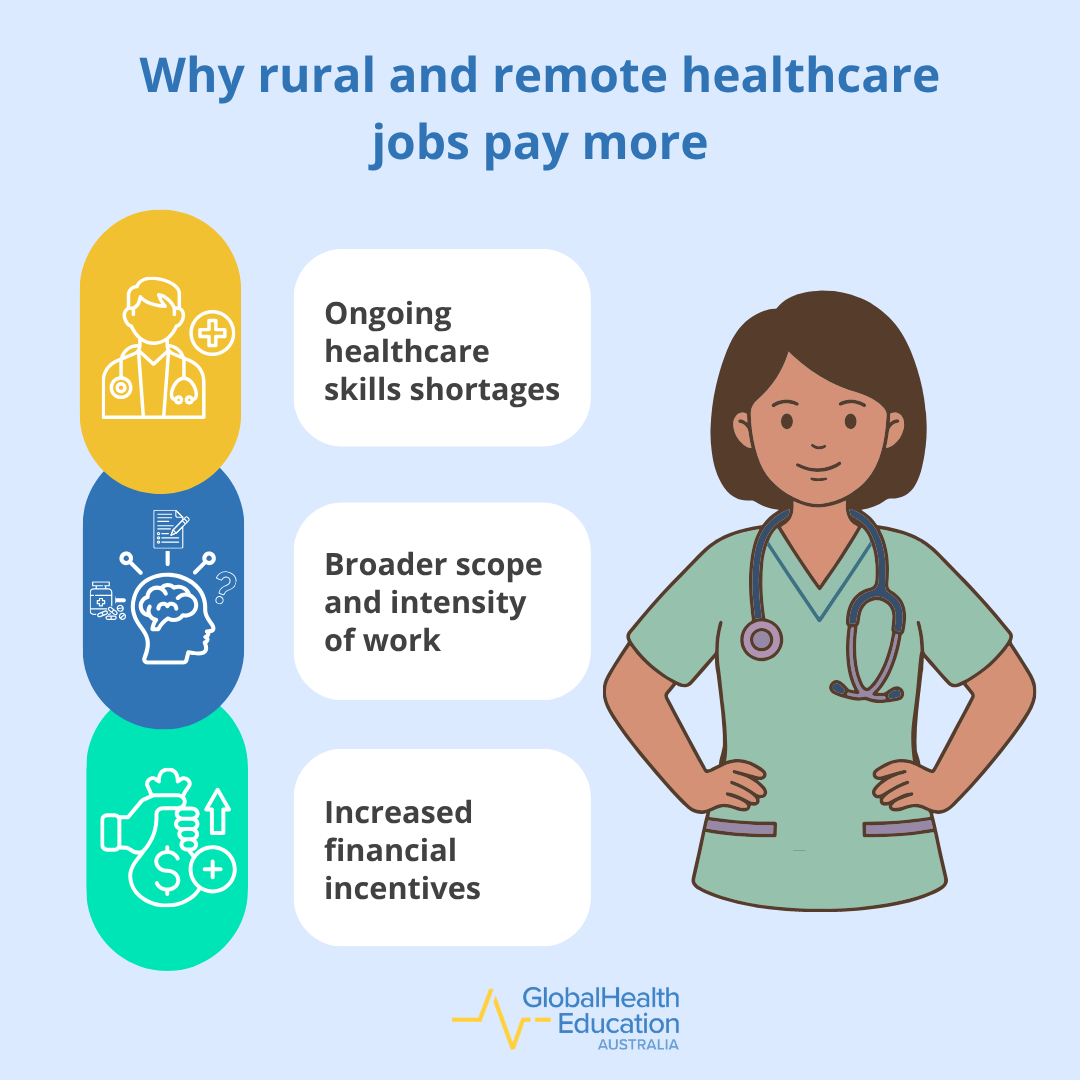
There are many reasons why working in rural healthcare roles pays more, making the switch from a city-based career more attractive. Some key reasons include:
Ongoing healthcare skills shortages
Various healthcare roles in rural and remote Australia are experiencing a significant shortage, which contributes to higher demand and places continued pressure on the existing workforce. Many nurses, doctors and allied health professionals choose to study and work in roles in major cities, taking advantage of the broad opportunities that larger tertiary hospitals, private practices, professional networks and specialised healthcare centres provide.
This means many regional, rural and remote areas may struggle to fill positions, leaving many communities underserved and creating more competition among employers who need to find ways to attract and retain skilled professionals. These factors contribute to the higher earning potential for those interested in roles in rural healthcare.
Broader scope and intensity of work
In very remote communities, there may only be one primary care practitioner available to support an entire population. They may need to travel great distances, work long hours and be on-call to address diverse patient needs, placing more pressure on their capacity and skill set.
Some rural healthcare professionals operate with more autonomy and can work within a wider scope of practice. This is common for rural and remote area nurses, who can address a broad range of patient needs, often with higher complexity and urgency.
In general, these roles are more demanding, as there are fewer opportunities to problem-solve and collaborate with multidisciplinary teams, which places a higher level of responsibility and clinical decision-making on individuals. The intensity, acuity and unpredictability of these roles often attracts higher salaries as a result.
Increased financial incentives
As part of the Australian government’s 10-year Stronger Rural Health Strategy to boost the rural healthcare workforce by 2028, various recruitment and retention schemes have been rolled out.
For example, the nationwide Workforce Incentive Program (WIP) includes three streams and delivers financial support directly to doctors, nurses, midwives and allied health practitioners operating in remote, rural and regional areas. Typically, higher payments are available in more isolated locations and for longer periods of service. The WIP serves as an additional income incentive that rewards clinicians for choosing to work beyond metropolitan areas and take up a role in rural healthcare.
There are state-specific initiatives that support the role of healthcare professionals, such as nurses and midwives, moving rurally. For example, Queensland Health offers a range of incentives, such as bonus payments for each year of service, qualification allowances, salary sacrifice options and leave loading for shift workers of up to 27.5 per cent. In a similar way, the New South Wales government offers sign-on bonuses of up to $20,000 to midwives and to healthcare professionals who accept hard-to-fill positions and critical vacancies in rural and remote areas.
Collectively, these incentives are designed to strengthen the healthcare workforce in high-need areas and are another factor that contributes to their higher earning potential.
11 healthcare jobs that pay more in rural Australia
Here are 11 healthcare rural jobs that pay well, ordered from highest to lowest earning capacity.
1. General practitioner
What is a typical salary for a rural GP?
A rural GP’s salary can be around 11.5 per cent higher compared to those working in major cities, with a salary range that typically spans between $200,000 and $350,000 or more, depending on location and demand.
General practitioners are already among the highest-earning professionals in healthcare, with demand remaining strong throughout Australia.
For example, in Dubbo, earnings can reach approximately $324,000 annually, while in the very remote Northern Territory region of East Arnhem Shire, salaries can be up to $286,000 per year. These figures are higher than the annual average salary for GPs of $240,000 and also exceeds the busy metropolitan city of Sydney’s average of $269,000 per year.
Rural GPs often serve as the first and only point of medical contact for an entire geographic population in parts of Australia that fall outside metro or regional cities. GPs in these roles may have a higher workload and need to provide comprehensive care to communities with limited access to resources and other healthcare professionals.
Due to their capacity to manage everything from basic primary care to emergency medicine, sometimes in unpredictable settings, rural GPs are well-positioned to earn higher salaries.
2. Dentist
What is a typical salary for a rural dentist?
Dentists working in regional and rural Australia can earn significantly higher salaries, ranging between $205,000 and $225,000 or more for skilled and experienced professionals.
In regional Yeppoon in Queensland, dentists can earn up to $245,000, while in Bendigo in Victoria, salaries can reach up to $226,000 annually. These salaries exceed the national average figure of $215,000.
Some dentistry jobs are structured on a commission basis, which are typically between 30 to 40 per cent and may be higher in rural areas.
Private dental practices may also offer relocation bonuses and accommodation support, particularly in remote and very remote areas. Overall, dentistry is one of the highest-paying jobs in rural areas, providing opportunities for professionals to expand their careers.
Are you a dentist looking to advance your oral health intervention skills?
For Ahpra-registered oral health therapists looking to enhance their skills in oral health and restorative dentistry, the Graduate Certificate in Oral Health Science from Adelaide University can provide you with the knowledge and practical skills to help address common dental issues in adults. This six-month course includes clinical placements and can enhance your clinical practice.


Enhance your clinical practice by offering oral health assessments, treatments, management and prevention for adult patients.
For professionals interested in a course that delivers comprehensive skills in oral health surveillance, services and delivery, the University of Sydney offers a Master of Dental Public Health. This 12-month course is aimed at dentists, public health and broader health professionals interested in developing their knowledge of oral disease prevention among vulnerable populations. This master’s degree could lead to roles in oral health research or health promotion and education, which is relevant to communities in rural, remote and very remote parts of Australia. A specialised qualification in oral health can also prepare you for roles that attract higher pay.

Acquire advanced skills in oral health surveillance, research and optimization of oral health services and delivery.
3. Acute care nurse
What is a typical salary for a rural acute care nurse?
In Australia, acute care nurses earn on average $90,000 annually.
Nurses looking at emergency and acute care roles in the remote community of Thursday Island, off the northern tip of Queensland, could earn up to $181,000 per year, while working in Biloela in acute care could mean a salary of around $196,000 annually.
These figures are substantially greater than the average figure and are also higher than roles found in Brisbane, which can reach approximately $101,000 annually.
In a rural or remote context, acute care nurses provide critical and often life-saving care to people in communities with limited access to hospitals and other services typically found in bigger cities. These nurses need to be adept at managing unpredictable and evolving patient presentations and medical emergencies in different settings. They may work in flight nursing roles or alongside other specialised nurses, such as critical care nurses in aeromedical evacuations in remote communities.
Does a role in acute care nursing sound like your next career move?
There are many acute care and emergency nursing courses to explore if you want to build valuable skills for these nursing roles.
For example, the University of Technology Sydney’s Graduate Certificate in Acute Care Nursing is an online course delivered over eight months with multiple yearly intakes to suit your busy lifestyle and career. You’ll undertake four units relevant to acute care nursing contexts, including Recognising and Responding to Acute Deterioration and Nursing-Sensitive Indicators in Acute Care.

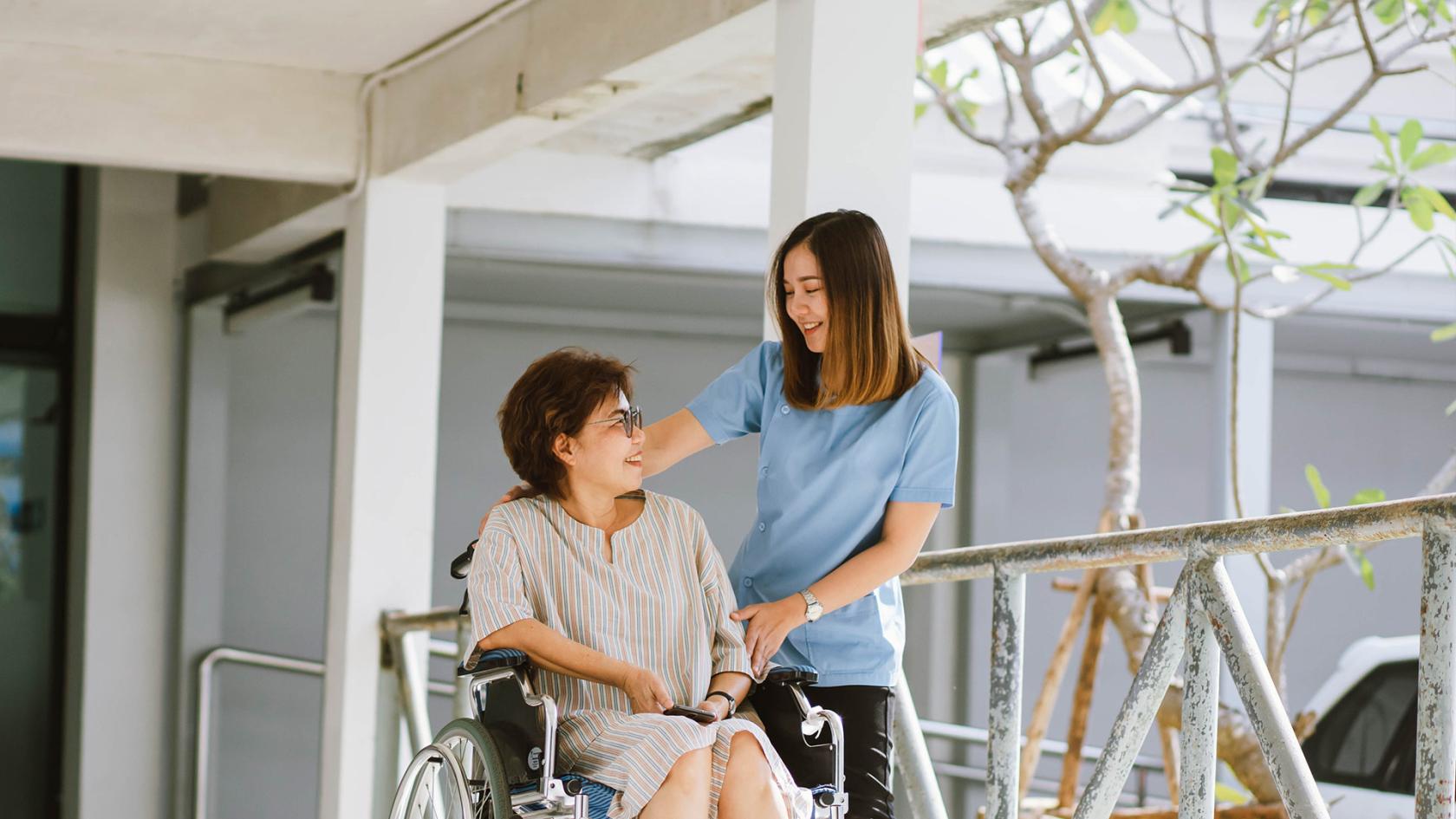
Delivered 100% online, with regular intakes every two months, this course enables you to balance your work and family commitments while learning the critical skills and clinically-based learning strategies to improve the core competencies associated with person-centred care.
This course allows you to progress to a Master of Advanced Nursing (Acute Care) for a greater depth of knowledge and the opportunity to pursue leadership roles, such as nurse unit manager, clinical nurse specialist or nurse educator. You’ll graduate from these courses as a high-value nurse who can provide quality nursing care in both urban and rural settings.
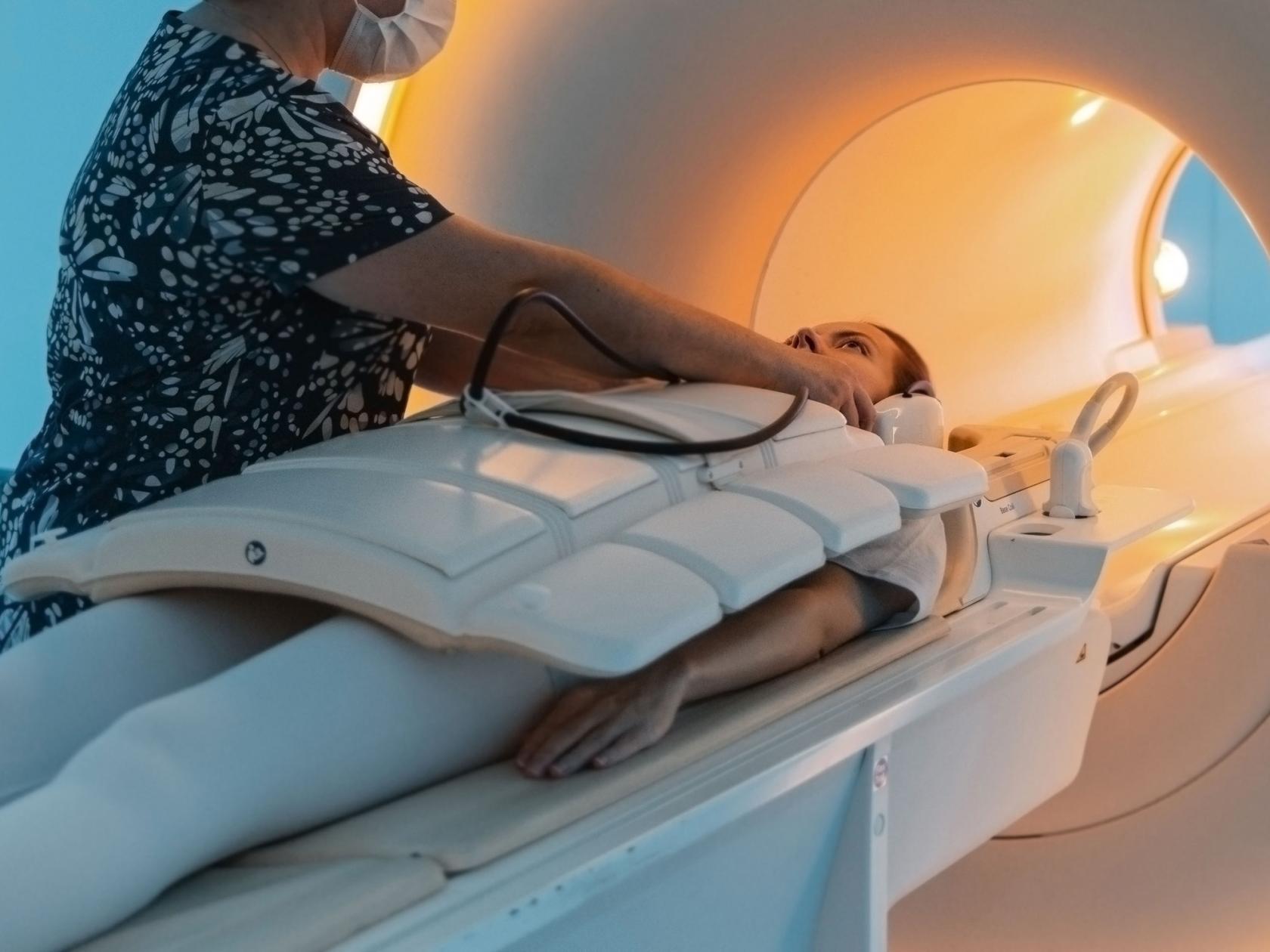
Delivered 100% online and specialising in acute care, this course is focused on comprehensive physical assessment and diagnostic reasoning, quality and safety in medicines, plus managing clinical deterioration and responding to nursing-sensitive indicators.
Griffith University’s Graduate Certificate in Acute Care Nursing is an online postgraduate nursing course that takes 12 months to complete full-time. You’ll gain important and essential skills to work in a variety of acute care settings, as you undertake units such as Advanced Health Assessment, Managing Complex Clients and Management of High Acuity Clients.


Develop specialised knowledge and skills for registered nurses to effectively manage and care for critically ill patients in fast-paced clinical settings.
Progress to a Master of Advanced Nursing Practice (Acute Care Nursing) for more comprehensive expertise and an advanced qualification that takes 18 months to complete full-time. This course will equip you with the skills to assess health quality and safety, improve patient outcomes and pursue more senior roles as you progress in your career, in any part of Australia.

Improve your advanced health assessment skills, interpret diagnostic data effectively and enhance your clinical communication and problem-solving abilities.
Queensland University of Technology’s Graduate Certificate in Nursing (Emergency Nursing) is a 12-month postgraduate course delivered on campus that equips you with the critical skills and quick decision-making expertise required to be successful in high-pressure emergency medicine environments. You can tailor your degree by choosing one of the various elective subjects, such as Complex Care for the Older Person, Ageing and Health Assessment or Contemporary Issues in Acute Nursing. You’ll be ready for a challenging and rewarding role in rural emergency care.


Equips nurses with the critical skills and rapid decision-making expertise needed to thrive in fast-paced emergency care environments.
4. Director of nursing
What is a typical salary for a rural director of nursing?
A director of nursing (DON) in Australia can earn an average salary of $165,000. However, this figure may be higher in rural and remote parts of the country. For example, in Alice Springs, DONs can earn $169,000 on average per year. Similarly, in the remote town of Nhulunbuy, DON salaries can reach $174,000 annually.
As far as nurse leadership roles are concerned, these are considered one of the most senior nursing positions in hospitals or healthcare facilities. A DON’s managerial and leadership responsibilities and extensive nursing experience contribute to why they earn what they do in all nursing contexts.
A DON’s role in smaller, regional, rural or more isolated areas requires a unique set of skills and leadership capabilities. In practice, they may need to take on a broad range of responsibilities, which could include management, community engagement and clinical nursing tasks due to the overall nursing workforce shortages in these areas.
Are you an experienced nurse looking to advance into a nurse leadership position?
A postgraduate degree in health leadership and management can set you up for success as a future nurse leader.
For example, the Graduate Certificate of Nursing (Leadership & Management) from James Cook University can help you develop the confidence and skills to lead multidisciplinary teams and manage the complexities of healthcare systems in a variety of nursing settings. This course is delivered online over eight months with multiple intakes per year, so you can enrol when it suits you best.
This graduate certificate provides a pathway to the Graduate Diploma of Nursing Majoring in Leadership and Management and the Master of Nursing Majoring in Leadership and Management for more in-depth skills and expertise. These courses provide opportunities to expand your nursing skill set and to pursue roles with higher responsibilities and may lead to a higher salary.
The courses below are listed by qualification level, from lowest to highest.


Acquire knowledge through this 100% online leadership and management major, which prepares you for leadership roles in healthcare.

Enhance your skills with this 100% online leadership and management major, which includes eight specialized units designed to prepare you to lead nursing practice and optimize patient outcomes in a hospital setting.

Acquire knowledge to equip yourself for more complex roles and provide better patient care.
5. Registered nurses
What is a typical salary for a rural nurse?
Registered nurses interested in a career move to a rural or regional town could earn much higher salaries compared to those in larger cities. While the average annual salary for a registered nurse is $95,000, nursing salaries can fluctuate dramatically depending on location, experience, postgraduate education and specialisation.
In Brisbane, for example, registered nurses can make around $108,000 per year, which is higher than the national average and more than most capital cities around Australia. However, nurses can still expect to earn higher salaries away from metropolitan areas overall, as seen in Far North Queensland, where salaries can reach up to $160,000 annually.
Opportunities for increased earnings may also be strong for agency and travel nurses who take on short-term contracts, which can attract higher hourly rates and may also include paid travel and accommodation.
Registered nurses are another essential group of healthcare professionals in high need across all parts of Australia, especially in medical practices where there is a significant regional and rural shortage.
Does a rural nursing job sound like the right career path for you?
There are many rural and remote nursing courses to explore that can help equip you for working in these environments.
For example, the University of Southern Queensland (USQ) offers a Graduate Certificate of Nursing (Rural and Remote) which delivers essential skills to nurses who want to make a successful transition into rural and remote practice. This course comprises four units, including the specialised units: Introduction to Rural and Remote Nursing Practice and Emergency Nursing in Isolated Practice.
The USQ Graduate Diploma of Nursing (Rural and Remote) builds on the foundational skills acquired in their nested graduate certificate, with units such as Situational Practice: Clinical and Critical Decision-Making Skills and Pharmacokinetics and Pharmacology for Scheduled Medicines. For more comprehensive expertise, you could progress to the Master of Nursing (Rural and Remote), where you’ll build your knowledge of social and cultural contexts of nursing care in rural and remote environments.
The USQ graduate diploma and master’s degree programs in rural and remote nursing meet the legislative requirements to allow graduates to administer and supply medicines under the extended practice authority (EPA). This allows nurses to work at a higher level of clinical practice and provide higher-quality care to patients, which could pave the way for higher earning potential.
The courses below are listed by qualification level, from lowest to highest.
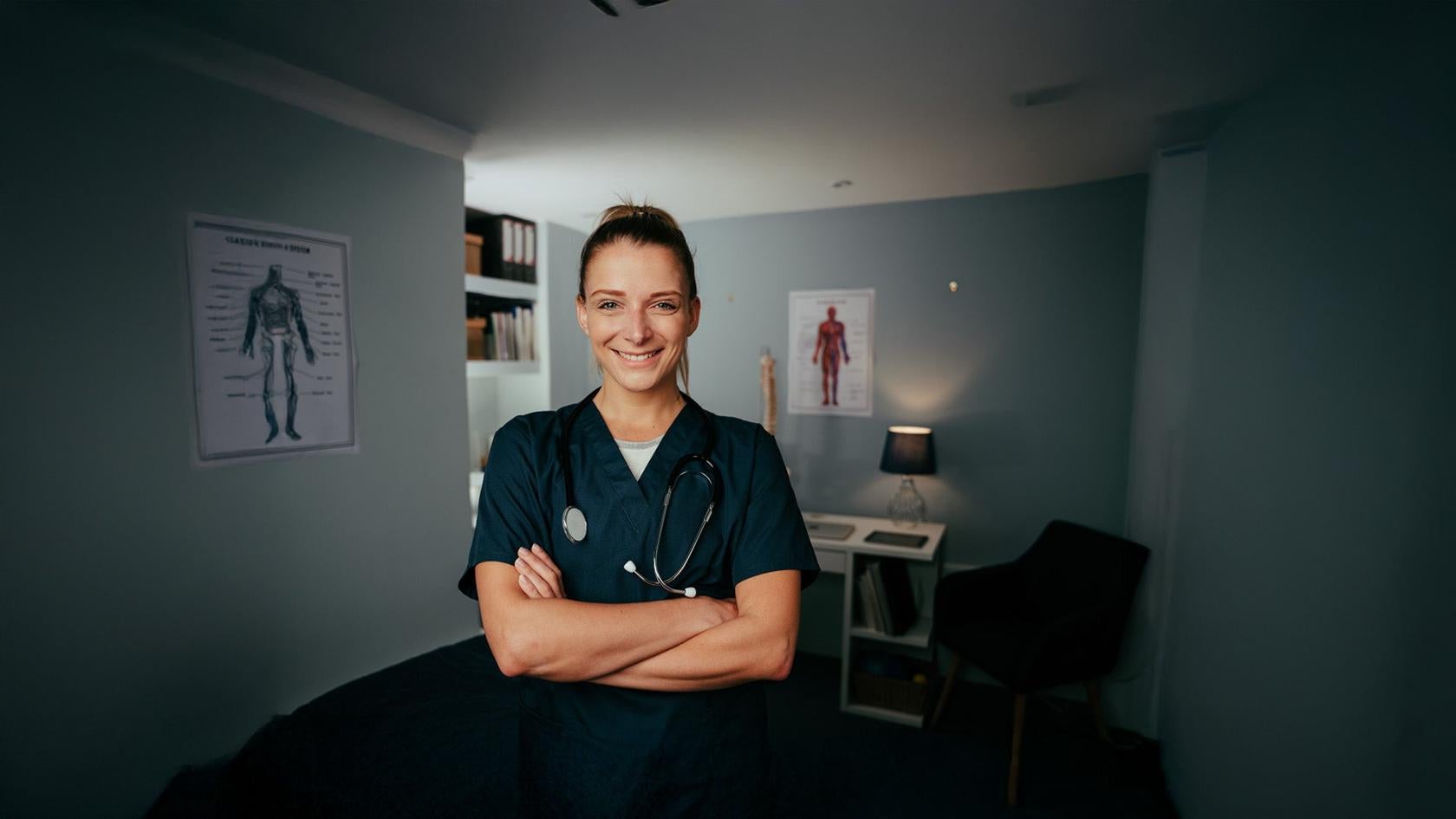
Expand your critical thinking and decision-making for self-directed and accountable nursing practices.

Develop your clinical decision-making skills in a rural and remote setting and gain the qualifications required to work effectively as a remote nurse.

Advance your nursing skills in rural, remote and isolated practice.
6. Optometrist
What is a typical salary for a rural optometrist?
Optometrist salaries in Australia can vary widely depending on location, experience and practice setting. Professionals in major metropolitan areas often benefit from larger client volumes and greater career path diversity, including opportunities to work in private and public settings.
Optometrists may also choose to specialise in paediatric care, ocular disease prevention or behavioural and vision therapy optometry. Consequently, there is an overabundance of optometrists in major cities, leading to more demand in rural and regional areas and the potential to earn more.
The current average annual salary for optometrists in Australia is $113,000, whereas in the regional town of Toowoomba in Queensland, salaries can be up to $144,000 annually.
In the outer regional area of Atherton, salaries can reach $159,000, which is distinctly higher than the national average and significantly higher than in the state’s capital city, Brisbane, where salaries can be $97,000 per year.
Optometrists can play a crucial role in rural and remote parts of Australia to support those with primary eye conditions, as well as populations with secondary vision problems due to ageing or chronic diseases. Around 33 per cent of Aboriginal and Torres Strait Islander adults experience vision problems, such as macular degeneration, diabetic retinopathy and cataracts – many of whom reside in these regions, creating a strong need for essential and accessible optometry care.
Are you an optometrist looking to complete your master’s degree?
If you have completed a Bachelor of Vision Science at the University of Canberra, you may be eligible for their Master of Optometry, which is a two-year, face-to-face master’s degree accredited by the Optometry Council of Australia and New Zealand (OCANZ). If you have completed a Bachelor of Vision Science from another university, you can apply for admission into UC’s Bachelor of Vision Science to become eligible for their Master of Optometry.
This master’s degree includes work-integrated learning components to consolidate your skills in real-world optometry settings. Explore what’s possible for your career with an advanced degree and help improve access to high-quality eye care in rural communities.

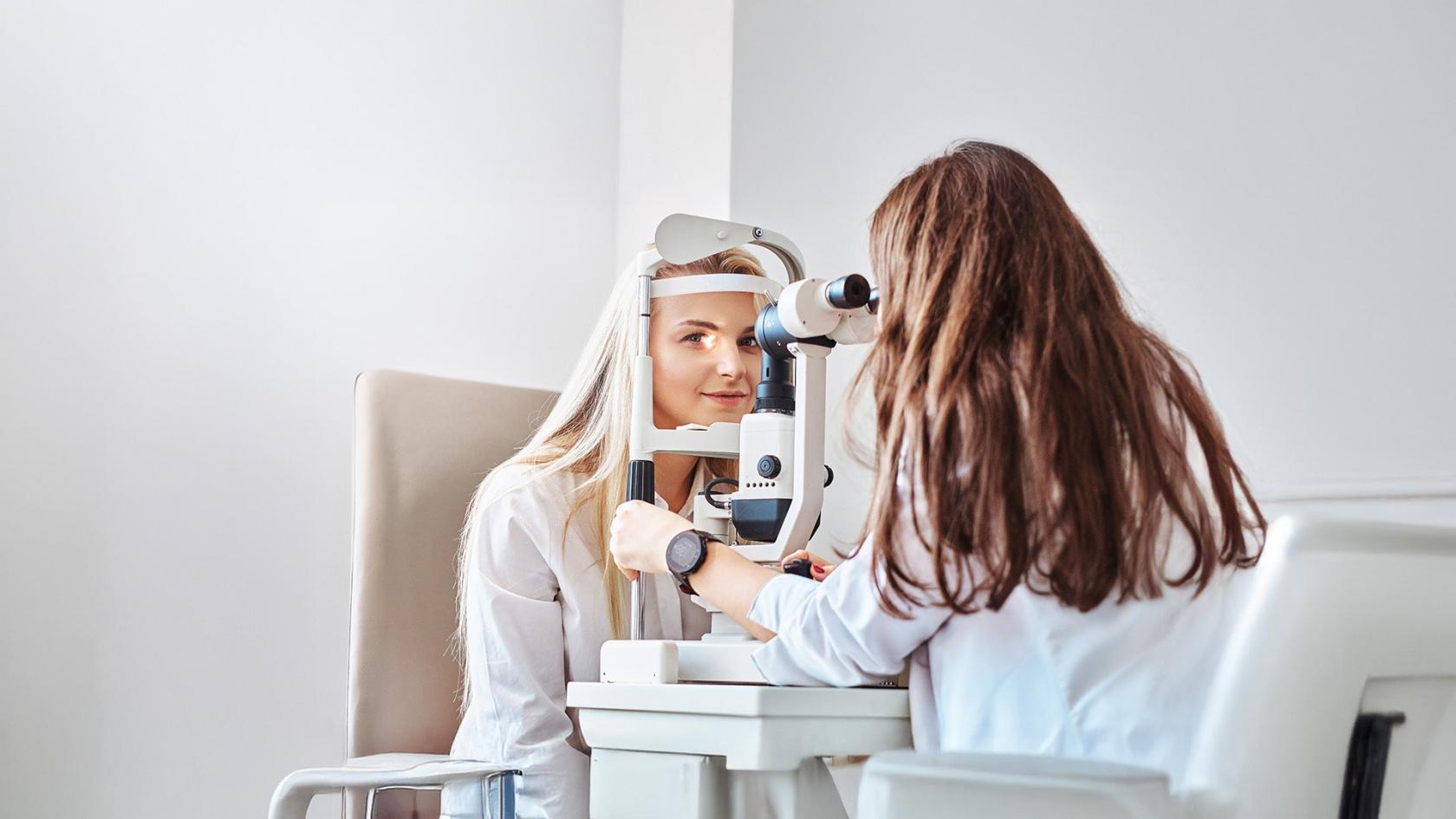
Build advanced optometry knowledge and clinical skills through a two-year professional qualification available to graduates of the University of Canberra Bachelor of Vision Science.
7. Pharmacist
What is a typical salary for a rural pharmacist?
Pharmacists, and in particular, hospital pharmacists, are in significant shortage throughout regional and rural Australia, driving strong demand for these skilled healthcare professionals.
The average salary for pharmacists is $110,000 per year. However, a rural pharmacist’s salary can be significantly more. Pharmacists in Katherine could earn around $129,000, while in Nhulunbuy in the Northern Territory, salaries can reach up to $151,000 annually.
In rural community roles, pharmacists may have a wider scope of practice to provide more direct care, prescribe certain medications and offer health advice. This makes these healthcare professionals an important part of the community while also helping to bridge the primary care workforce gap in rural areas.
Are you interested in a career as a pharmacist?
The University of Canberra’s Master of Pharmacy is a postgraduate course accredited by the Australian Pharmacy Council and provides a pathway into this field. This course is designed to be completed over two years at a full-time study load and is suitable for those with a bachelor’s degree in any discipline, plus the completion of degree-level units in chemistry, biochemistry, microbiology, anatomy, physiology and pharmacology.
For those considering a career in rural pharmacy practice, this course prepares you to take on broader responsibilities, from medication management to patient education, making you well-equipped to meet the diverse needs of regional and remote communities.

Develop the scientific, clinical and decision-making skills required for pharmacy practice through pharmaceutical science, patient care, research and hands-on learning in real healthcare settings.
8. Midwife
What is a typical salary for a rural midwife?
Midwives in smaller towns and rural areas can earn well above the national annual average of $105,000. For example, in Mount Gambier, midwives can make around $118,000 annually, while in Carnarvon, they can earn $131,000 per year.
Those seeking roles in parts of regional and rural Queensland can find lucrative opportunities, such as in Kingaroy, where midwives can make up to $141,000 per year. These figures are a stark contrast to the salary potential for midwives in Sydney, which is around $92,000 annually, or in Perth at approximately $96,000.
Similar to nurses, midwives play a vital and often demanding role, where they need to advocate for their patients, make fast clinical decisions and provide compassionate care.
As midwives provide a specialised service to birthing mothers, their babies and families, their skill set is highly sought-after in underserved areas throughout the country. In these areas, midwives may need to work independently, without the added support of obstetricians or other healthcare professionals. As a result, midwifery is one of the many high-paying jobs in rural areas within healthcare.
Have you ever considered moving into midwifery?
For registered nurses looking to gain a midwifery qualification, the University of Newcastle’s Master of Midwifery (Graduate Entry) provides an ideal platform to launch your midwifery career. This master’s degree is a two-year, on-campus course in partnership with NSW Health and associated hospitals, designed to accelerate nurses into the midwifery sector. You’ll gain valuable skills that are relevant to working regionally across all states, territories and parts of Australia, with units such as Working with Aboriginal and Torres Strait Islander Childbearing Women, Perinatal Mental Health and Women with Complex Labours and/or Births.

Transition from nursing to midwifery through a professionally accredited program that combines contemporary theory with extensive clinical experience.
Don’t have a nursing background?
Consider Curtin University’s Master of Midwifery, which is uniquely designed for professionals who hold a bachelor’s degree from another field and takes two years to complete full-time or four years at a part-time study load. Units such as Indigenous Perspectives for Clinical Practice give you an advantage for working in rural and remote areas supporting women from diverse cultural backgrounds, including Aboriginal and Torres Strait Islander patients.
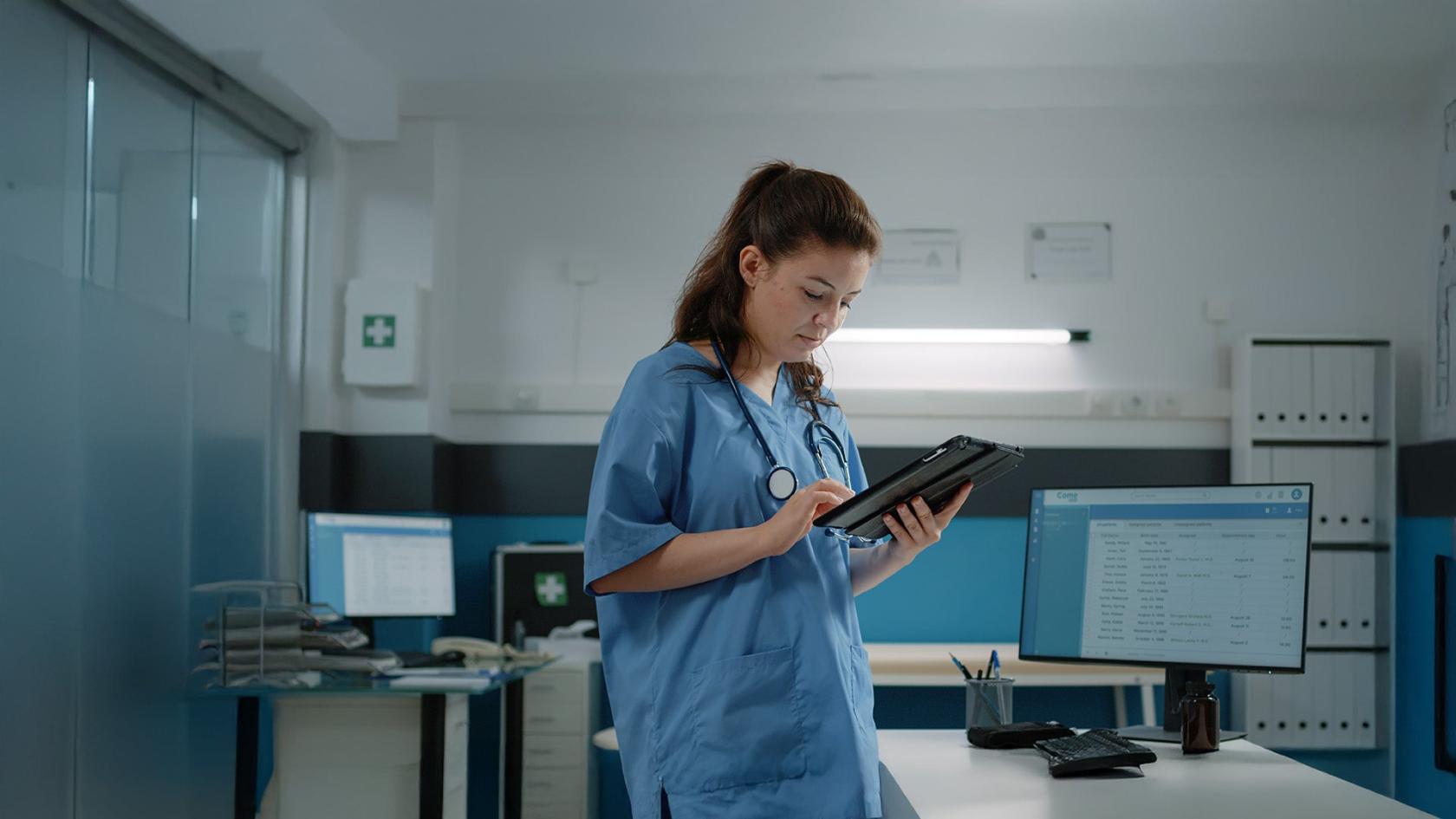
Prepare for professional midwifery practice through evidence-based study, more than 800 supervised clinical hours and continuity-of-care experiences spanning pregnancy, labour, birth and postnatal care.
Explore the range of postgraduate midwifery courses that are suited to existing midwives and to those seeking entry into this rewarding and dynamic field.
9. Paramedic
What is a typical salary for a rural paramedic?
Paramedics and ambulance officers earn around $105,000 annually, with many capital cities sitting below this national average figure.
For example, Melbourne paramedic salaries are around $67,000 per year. Meanwhile, in Sydney, paramedics can earn approximately $77,000 per annum and in Perth, salaries are around $60,000 annually. In contrast, in places like Mackay, Queensland, paramedics can earn up to $124,000.
Paramedics are in high demand in rural and remote Australia, where their role often entails managing critical or complex situations in unpredictable environments. There are financial incentives that vary by state and organisation available to paramedics. For example, the Queensland Ambulance Service, St. John’s Ambulance WA and NSW Health offer substantial financial support to experienced paramedics, including covering moving costs, flights, accommodation and salary packaging options.
Depending on the role, such as working in mining sites as a FIFO paramedic, roles may attract penalty rates for overnight shifts, weekends and being on call, which contribute to the overall earnings that paramedics receive.
Are you a paramedic looking to advance your career with a master’s degree?
Monash University’s Master of Critical Care Paramedicine is a postgraduate course for paramedics interested in gaining specialist skills for critical care roles. This course takes around three years to complete at a part-time study load and is delivered fully online. You’ll gain advanced skills in airway management (including intubation), pre-hospital emergency anaesthesia, advanced diagnostics and complex pharmacological interventions.
You’ll also develop important leadership, research and decision-making skills, which can support your career progression. Upon completion of this master's degree, you’ll be prepared for roles in intensive care and critical care paramedicine. You'll be able to provide quality care to high-acuity patients across a wide range of presentations, including trauma, cardiac, respiratory, paediatric and obstetric cases.
If you’re considering a career in rural or remote Australia, this course is particularly valuable as you’ll be equipped to work with greater independence, manage complex emergencies, provide prolonged care and take on leadership roles in small or understaffed teams, positioning you as a highly valuable and effective healthcare professional in these environments.

Develop autonomous clinical reasoning and decision-making abilities based on an advanced understanding and interpretation of clinical presentations.
10. Perioperative nurse
What is a typical salary for a rural perioperative nurse?
Theatre and surgical nurses of all specialisations are in very high demand, with regional shortages occurring in all states and territories except for the ACT. These nurses fall into the category of perioperative nurses, which includes instrument nurses, circulating nurses and post-anaesthesia care unit (PACU) nurses.
Currently in Australia, surgical and theatre nurses earn on average $95,000 annually. In the very remote Northern Territory area of Tennant Creek, these specialised nurses could earn around $116,000 per year, which exceeds what these nurses can earn in the NT capital, Darwin, at $91,000 per year.
Nurses trained in perioperative care possess highly specialised and advanced skills, specific to patients undergoing surgery. Depending on their specific role, they may be involved in pre- and post-operative assessment, monitoring and care, as well as supporting surgeons and specialists during surgical procedures. Their level of expertise and competence in environments with fewer resources, coupled with the workforce shortage in these areas, drives up demand and higher salary potential.
Does a specialised role as a perioperative nurse interest you?
Take your nursing career into new horizons with a surgery-specific postgraduate course at Deakin University. The Master of Advanced Clinical Nursing (Perioperative) program provides you with skills to support patients and their holistic needs before, during and after surgery, with a focus on safety, advocacy and recovery in perioperative settings.

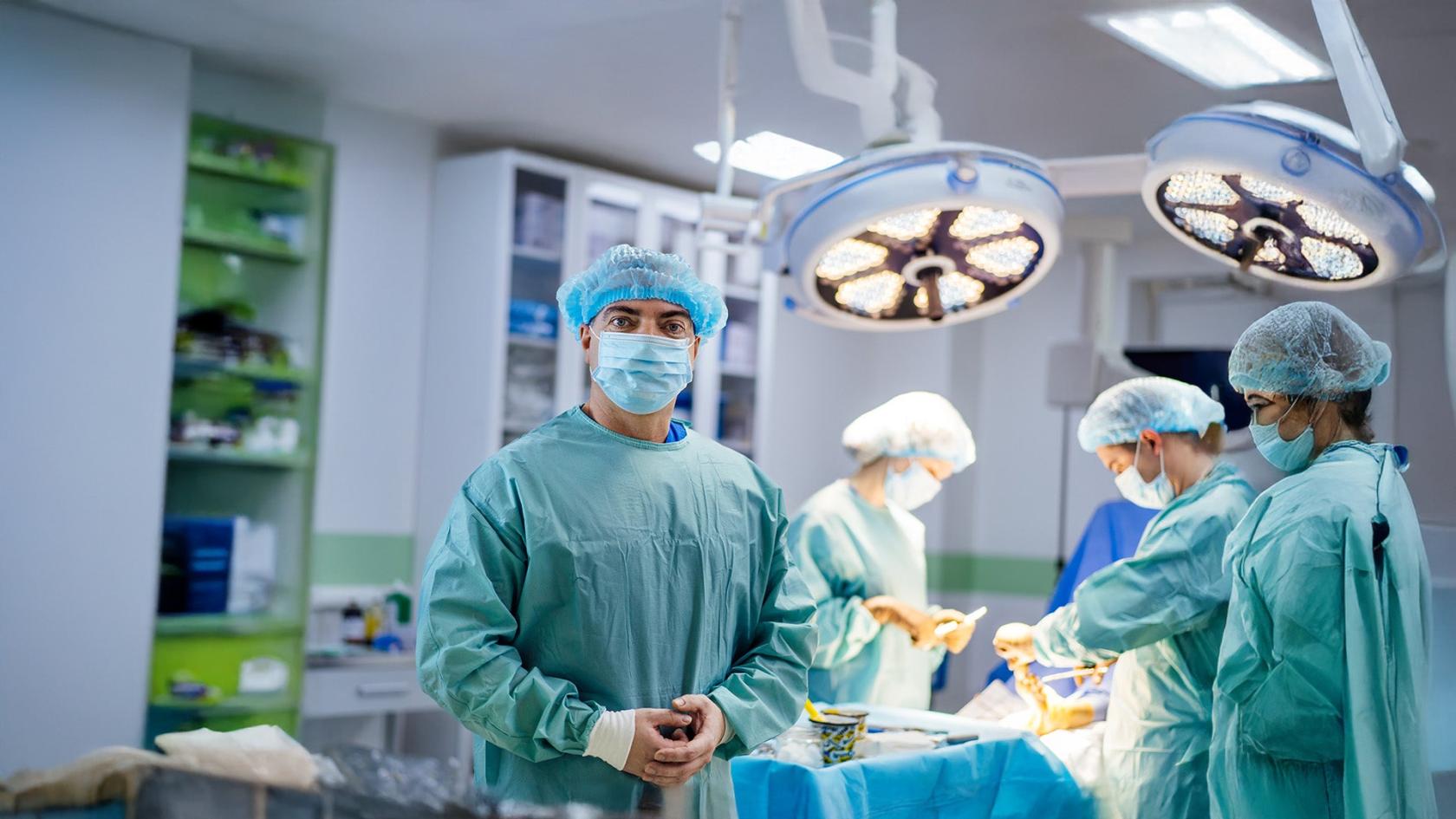
Expand your capability across pre-operative, intraoperative and post-operative care while preparing for advanced responsibilities throughout the surgical journey.
Deakin’s Master of Advanced Clinical Nursing (Intraoperative) program allows you to step into the role of either a circulating nurse (scout nurse) or an instrument nurse (scrub nurse), where you’ll gain expertise in prioritising surgical sterility, patient safety and assisting surgeons throughout procedures.

Advance your ability to promote patient safety, manage risk and deliver specialised nursing care throughout complex surgical procedures.
Each of these courses is delivered online over three years at a full-time study load and are designed to extend your knowledge and skill set to be equipped for roles specific to the surgical process and related patient care.
11. Post-anaesthesia care unit (PACU) nurse
What is a typical salary for a rural PACU nurse?
On average, PACU nurses can earn around $109,000 per year. In Melbourne, the average salary for PACU nurses is around $78,000, which is much lower than the Victorian regional area of Gippsland, where these nurses can find salaries up to $104,000.
In the remote area of Karratha, Western Australia, salary figures are seen for PACU nurses at $106,000 as an average, which is higher than in Perth, where salaries are around $88,000 annually.
PACU nurses can be categorised as perioperative nurses, although they are distinctly different in their role, responsibilities and specialised training. These nurses are also known as recovery nurses where they assess and monitor patients as they recuperate after surgery involving anaesthesia. Their unique skill set and expertise make them highly valuable in rural and remote surgery settings.
Have you wondered about becoming a PACU nurse?
Deakin University's Master of Advanced Clinical Nursing (Perianaesthesia) program is aimed at nurses who want advanced knowledge of pharmacodynamics, anaesthetic medicine and how this impacts patients in surgical environments. This course develops skills in patient monitoring, assessment of haemodynamic states and providing post-operative anaesthesia care.
Deepen your expertise in patient assessment, pharmacological therapies and clinical monitoring to provide advanced nursing care before, during and after anaesthesia.
The University of Tasmania also offers a Master of Advanced Nursing (Perianaesthesia Nursing), which is a comprehensive degree that equips you with the skills and knowledge to provide effective care as an anaesthetic and recovery nurse. This course has units relevant to rural and remote nursing contexts, including Interpreting Patient Deterioration and Operational Aspects of Healthcare in Remote and Extreme Environments, to help you understand how to provide targeted care for people in these unique environments.


Trains nurses in advanced perioperative care, focusing on anaesthesia management and post-operative patient recovery.
How to determine if a rural healthcare role is right for you
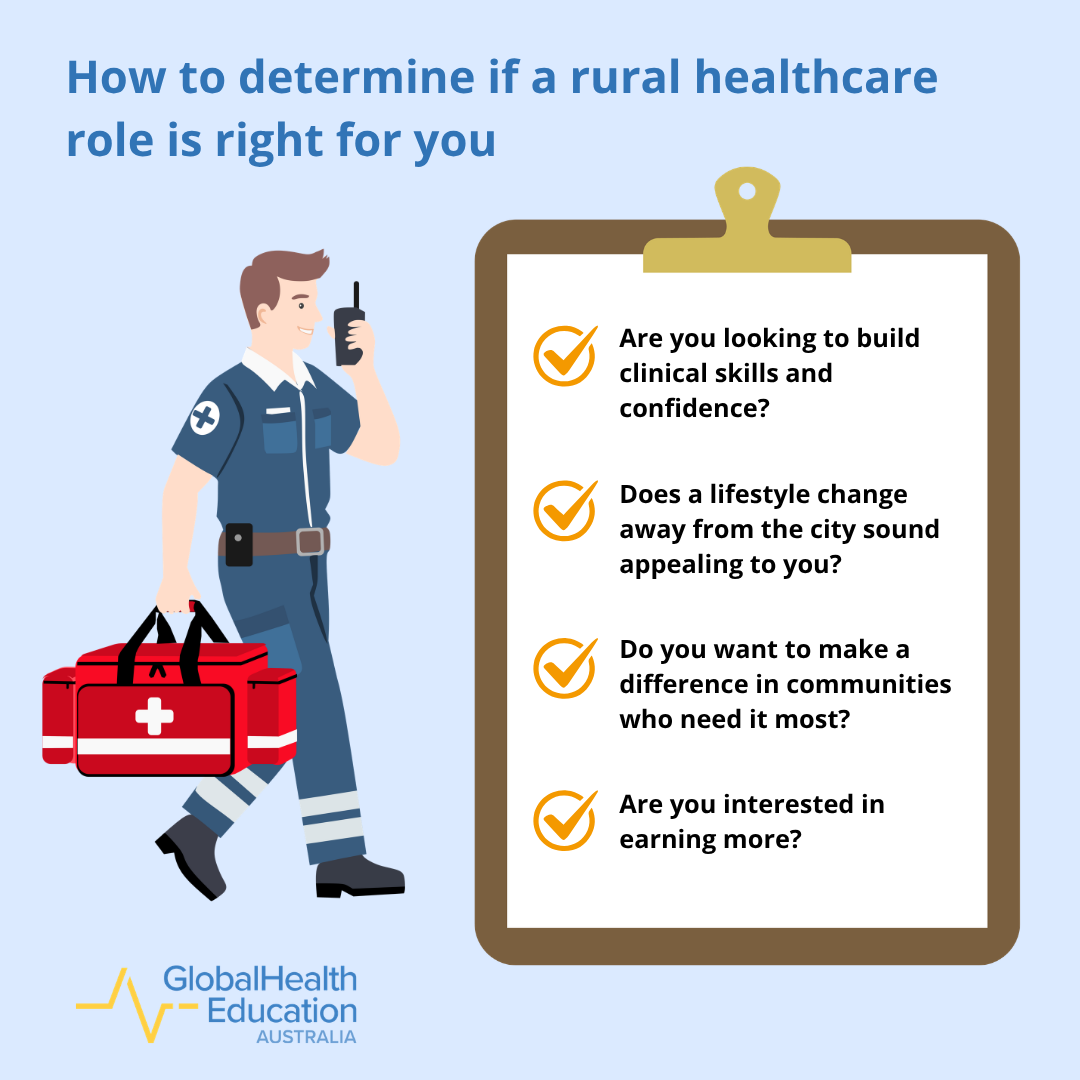
Working in a healthcare setting outside a major city may not be for everyone. However, for the right person, it can offer opportunities for professional growth, meaningful impact and the potential to earn more.
Here are a few questions to reflect on that can help you determine whether these roles could be suitable for you.
Are you looking to build clinical skills and confidence?
In rural settings, you’ll have the chance to expand your skills in ways that are not always available in major cities. You’ll be exposed to a broad range of practice areas and the chance to build confidence, critical thinking and problem-solving skills. Working as a rural or remote healthcare practitioner can help make you more versatile, adaptive and resilient. This can support your progression into future roles, whether continuing in these settings or moving back to urban areas with more confidence and capabilities.
While the learning opportunities are abundant in a rural healthcare environment, Michelle Deroubaix, registered nurse and mentor, says that nurses should gain around five years of experience before considering a move. She says that nurses with experience in acute care, intensive care or midwifery would be highly valuable in rural healthcare.
Does a lifestyle change away from the city sound appealing to you?
If you are tired of long commutes and are considering a break away from the busy lifestyle of a major city, a rural healthcare job may be ideal for you. Working as a clinician in a smaller town can offer a strong community connection, a slower pace of life and the potential for better work-life balance. Depending on your specific circumstances, relocating to a rural or remote area could benefit you both personally and professionally in new ways.
Do you want to make a difference in communities that need it most?
A rural healthcare job allows you to provide essential care to people in areas with reduced access to healthcare services. Whether it’s a rural nursing role or a job working in allied healthcare, you’ll have the opportunity to work with vulnerable populations, including lower socio-economic groups and Aboriginal and Torres Strait Islander communities. Your contribution, specialised skills and person-centred care approach can help make a tangible difference in the health and wellbeing of individuals with more chronic or complex care needs.
Are you interested in earning more?
The higher salary potential across many nursing, primary care and allied health roles is evident throughout many parts of regional, rural and remote Australia. If you work in these roles, you may find you can earn anywhere between 20 to 117 per cent more in a comparable role outside most capital cities. If you’re saving for a house deposit, paying off a loan or looking to earn more in preparation for starting a family, then moving out into a rural healthcare job could help you earn more and achieve your financial goals sooner.
Preparing for a successful transition into rural healthcare
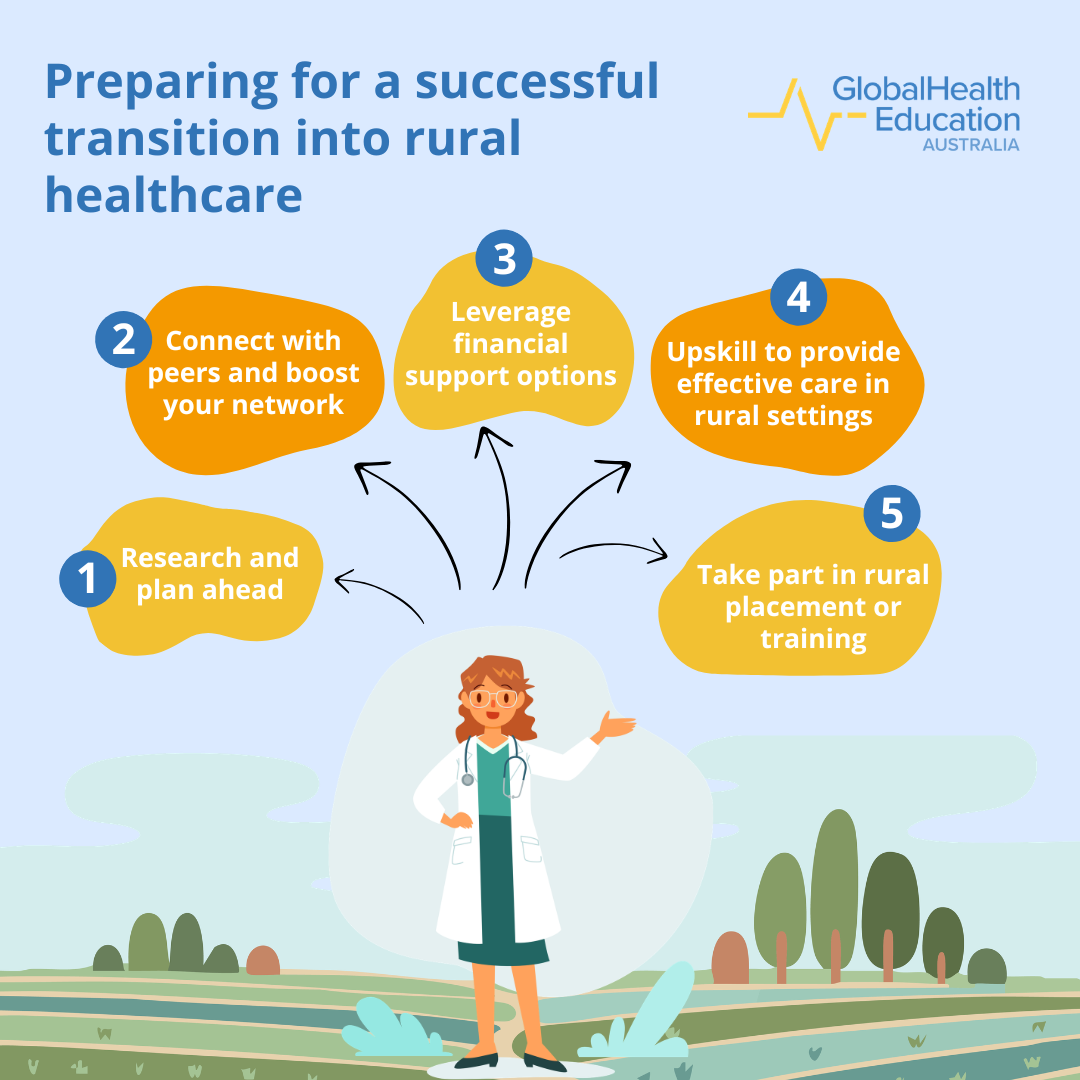
Taking the time to plan your move will ensure you hit the ground running and integrate smoothly into your new rural healthcare role.
Research and plan ahead
An important first step is to ensure you do your research. Investigate the specific town or region you’re interested in working in before accepting a role. Look into local house prices, research schools if you have children and consider the infrastructure and resources available to you.
Getting an idea of the overall cost-of-living compared to urban areas can help you feel more prepared.
It’s also helpful to understand the specific healthcare challenges prevalent in the region you’re considering moving to and gain some insights into the community and their unique needs. This can help set your expectations about the different demographics, work environment, lifestyle and overall logistics of moving, while also supporting a smoother integration into the area.Connect with peers and boost your network
Moving away from your established social and professional network can feel destabilising initially. To help ease the transition and reduce potential feelings of isolation, it can be helpful to start building connections before you make the move rurally.
Registered nurse and nursing coach, Madeline Kessler, says that working in under-resourced and smaller towns can provide a rewarding experience for healthcare professionals. “You do end up making some lovely connections and people in the country are warm, kind and caring.” She highlights how these regions are close-knit and healthcare professionals foster a more connected workplace environment. “It adds another layer of purpose and meaning [to these roles].”
Joining professional bodies such as the National Rural Health Alliance or the Council of Remote Area Nurses Australia (CRANAplus) can be another beneficial step. These organisations provide access to networking opportunities, mentorship programs and forums where you can connect with others already working in rural and remote settings local to you. Connecting with peers who understand the unique landscape of rural practice can help you get the most out of your rural healthcare experience.Leverage financial support options
Take advantage of the various financial support options available when looking into rural healthcare roles. In some instances, you may be eligible for more than one scheme, giving overlapping financial support from various providers. As mentioned, this could include national schemes such as the Workforce Incentive Program, which provides ongoing payments to clinicians, Aboriginal and Torres Strait Islander healthcare professionals and practices in rural locations.
Another consideration is the Health Workforce Scholarship Program. This program provides funding to existing healthcare professionals in regional, rural and remote areas in Australia, including doctors, nurses, midwives, allied health professionals, dentists and Aboriginal and Torres Strait Islander health workers. Funding is typically up to $10,000 per year of study and is offered either as a scholarship for postgraduate courses or as a bursary for shorter training programs to help primary healthcare professionals better serve their communities.Upskill to provide effective care in rural settings
You may need to obtain additional skills to provide more targeted care for your community and their health needs.
For example, one important area to upskill in could be telehealth services. In the context of rural healthcare, these services, including telehealth nursing, enable you to provide more accessible care with better continuity for those who have difficulty accessing health services in-person.”
Pursuing advanced qualifications through postgraduate study can also give you an advantage in these roles. Courses that develop skills in cultural competency, chronic disease management, diabetes education, perinatal mental health and community nursing can better prepare you to meet the diverse needs of patients in rural and remote settings. As you build your scope and expertise, you’ll become a more well-rounded, adaptable and confident healthcare professional in these environments.Take part in a rural placement or training program
If you’re currently studying a healthcare degree at university or considering enrolling, completing a rural placement or rural training program as part of your studies can be immensely beneficial.
For example, Going Rural Health is a support initiative delivered through the University of Melbourne that provides financial assistance, accommodation and placement support to students completing rural or remote clinical placements. It is available to both undergraduate and postgraduate students enrolled in eligible health degrees from all nationally-recognised universities.Madeline says nurses who are comfortable working more independently with a diverse skill set are well-suited to working in these smaller, more isolated communities. “If you’re going to consider rural nursing, you want a lot of experience behind you.” She says additional skills in cannulation, taking blood or wound care management are also beneficial. Ultimately, Madeline says that a rural nursing job could be the right career move for someone who is looking for a challenge.
Completing a rural placement provides the opportunity to confirm whether rural healthcare is the right fit for you. It provides first-hand experience of the broader scope of practice, level of independence and community-focused nature of rural work, as well as insight into the lifestyle. This can help you make a more informed decision about pursuing a rural career before committing long term.
Go rural, grow your career and increase your salary potential
Relocating to rural Australia represents an enriching opportunity to broaden your skills and advance your career. While the transition requires resilience and planning, with the additional skills gained through postgraduate study, taking on a rural healthcare role can help address workforce shortages and can help you attract a higher salary.
If you’re ready to explore your options and pursue a rural healthcare job, browse the range of courses to get started. GlobalHealth Education lists courses in nursing, counselling, mental health, psychology, social work, health leadership, public health, occupational therapy, sonography, pharmacy, physiotherapy, dentistry and more.
If you need help choosing the right study path for success in rural healthcare, our Education Consultant, Catriona, can help. She can provide career advice and support with choosing a postgraduate course to match your needs. Book a complimentary call today to take the first step toward your rural healthcare career.